


Progressive Schools vs Traditional Schools: What’s the Real Difference?
Published on: March 23, 2026
🕒 4 min read
In this guide
When Vancouver parents start comparing school options, the progressive vs traditional question comes up quickly. Both terms get used loosely, which makes genuine comparison difficult.
Here is a clear, honest breakdown. Not a sales pitch for either side — a practical guide so parents can make an informed choice.
What Traditional Schools Typically Emphasise
Traditional schooling is built around a sequential delivery model. A teacher presents content in a subject area. Students practise it. Mastery is measured through tests, quizzes, and standardised assessments. Subjects are distinct — math is math, science is science, and the schedule keeps them separate.
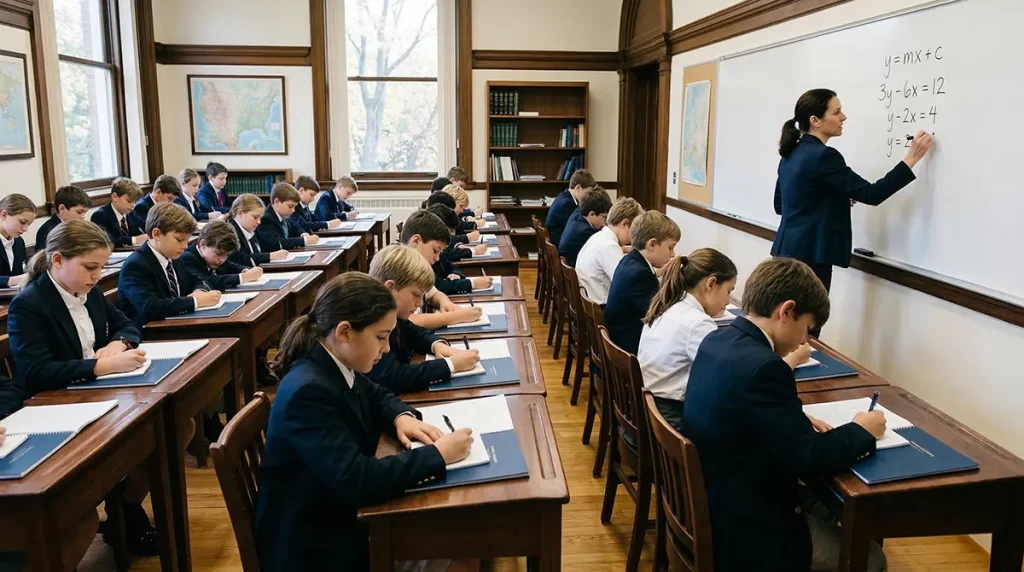
This approach has real strengths. It’s predictable. It produces clear metrics. Students and parents always know where they stand relative to a defined standard. For children who respond well to structure and sequential instruction, it can be highly effective.
Traditional schools in Vancouver range from public schools operating within the Ministry of Education framework to private institutions with strong exam preparation cultures and structured academic programs.
What Progressive Schools Emphasise
Progressive schools shift the centre of gravity from content delivery to student understanding. The goal isn’t “covering the curriculum” — it’s ensuring students actually grasp ideas, can apply them, and can connect them to other ideas.
Key emphases in a well-designed progressive program:
Real-world relevance. Learning is connected to authentic contexts. Students study issues, systems, and problems that exist outside the classroom walls, not just inside textbooks.
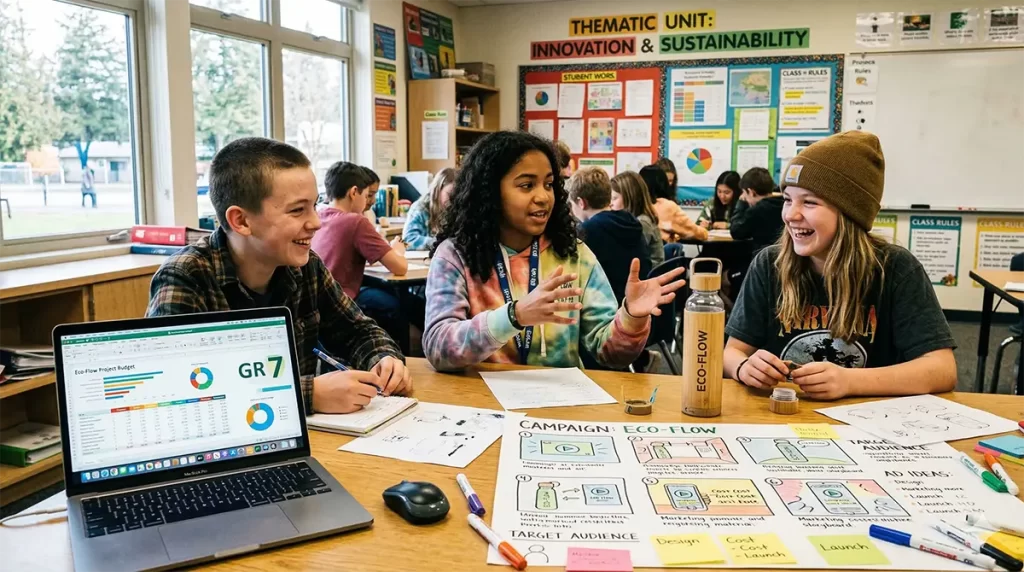
Cross-subject integration. Subjects are taught in relationship to each other. A theme like Entrepreneurs in a Grade 7/8 class might involve economics, persuasive writing, design, history, and data analysis — all as one coherent unit of study, not four separate lessons.
Student-driven work. The majority of classroom time involves students doing something: researching, building, presenting, debating, revising. The teacher facilitates and assesses rather than primarily lectures.
Demonstrated understanding over recalled information. Assessment tends to involve showing what you can do with knowledge — through projects, presentations, and portfolios — rather than reproducing it on a test.
Differences in Teaching Methods
In a traditional setting, the teacher is typically the source of knowledge. The lesson flows from the teacher outward to students. The teacher demonstrates, students practise, the teacher evaluates.
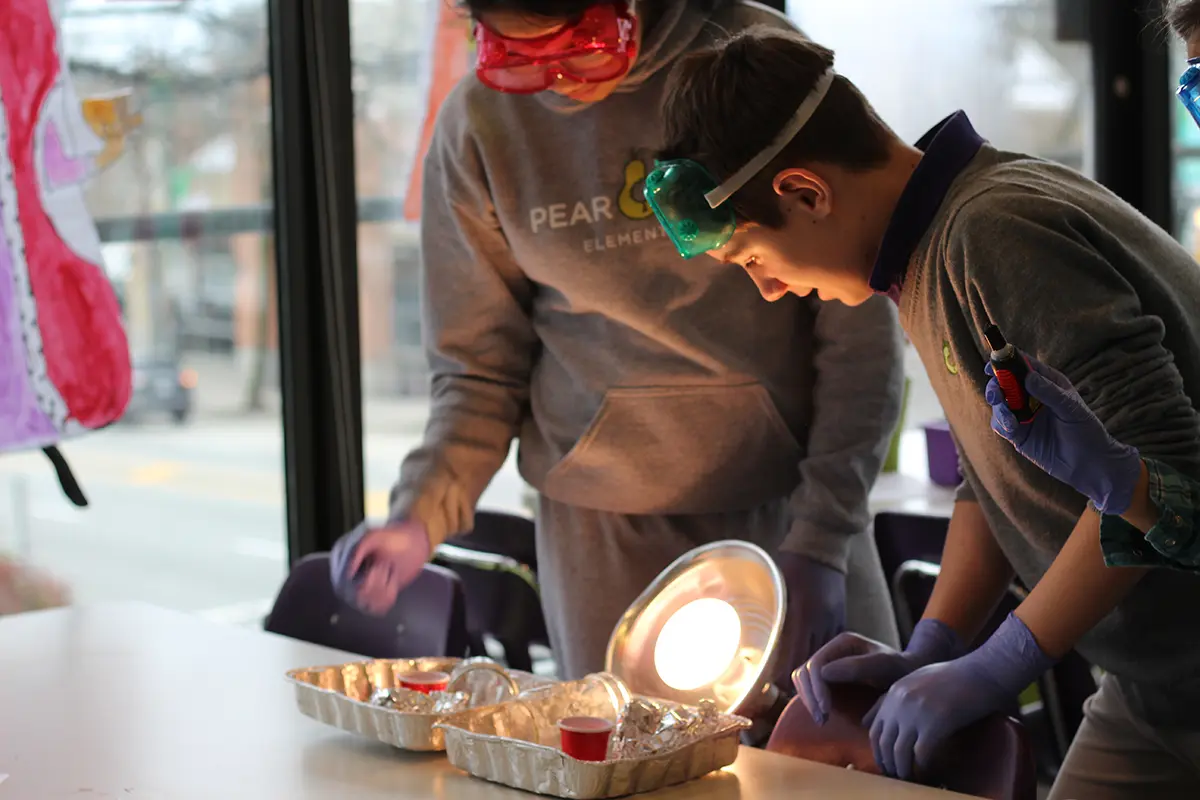
In a progressive setting like Pear Tree School, the lesson design inverts this. Students encounter a problem or question connected to a real-world theme. They explore it through research, discussion, experimentation, and collaboration. The teacher sets the direction, poses the questions, and guides the process — but the students carry most of the intellectual weight.

This means the quality of the teacher matters in different ways. A progressive classroom requires a teacher who can manage complexity, read a room, ask good questions, and assess understanding in motion rather than only through written tests. At Pear Tree, teachers hold Masters-level qualifications and are hired against specific pedagogical standards.
Differences in Classroom Structure
Traditional classrooms typically follow a structured timetable: 40 minutes of math, then a break, then 40 minutes of language arts. Each block is self-contained.
Progressive classrooms often run longer thematic blocks where multiple subjects are active simultaneously. A student working on a theme-based project might be writing, doing calculations, and drawing from scientific research within the same session — because the theme brings those skills together naturally.
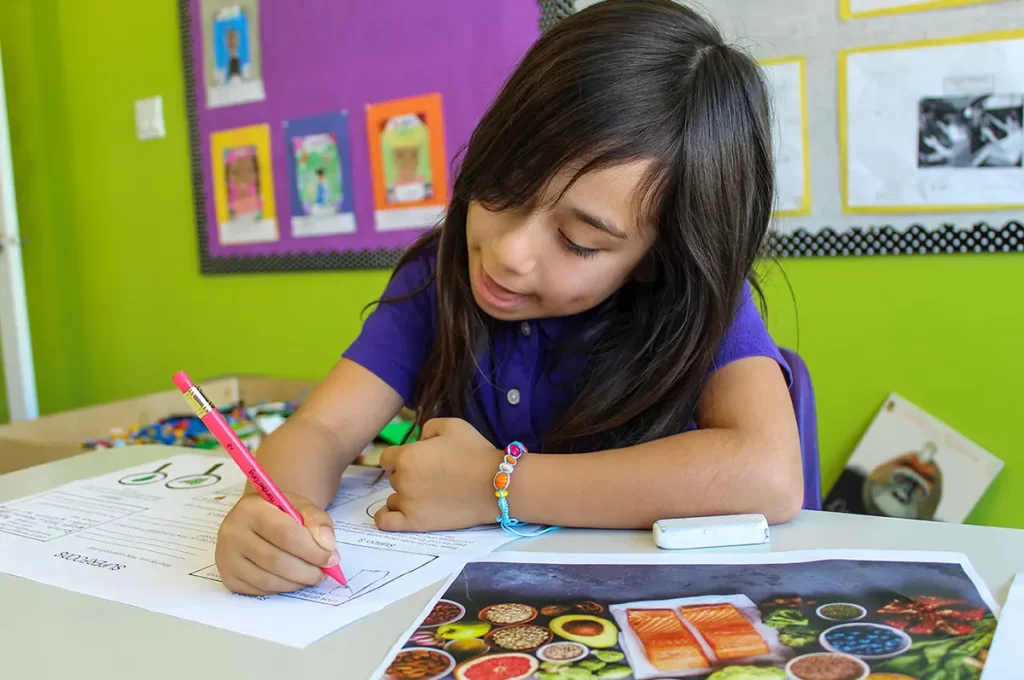
At Pear Tree, classes average 16 students. That small group size is not incidental. The collaborative, discussion-heavy, project-driven nature of the program requires enough space for every student to participate meaningfully.
Differences in Student Outcomes
This is where the honest conversation matters most.
Both approaches can produce strong students. But they produce strength in different areas.
Traditional school tends to build: comfort with structured testing, sequential subject knowledge, and discipline in following instruction.
Progressive school tends to build: the ability to connect ideas across subjects, communicate clearly in multiple formats, and work through problems that don’t have one right answer.
Neither list is complete without the other. But ask yourself which list looks more like the skills your child will actually need — in university, in a career, in a world that keeps changing.
At Pear Tree, students don’t just learn content. They build things, present arguments, revise their work, and defend their ideas to real audiences. By the end of each year, they have a portfolio of work — not just a report card.
One Pear Tree parent, whose son was in Grade 7, put it simply: “The project-based learning is helping him connect learning with real life skills. He has developed independence and responsibility which will help him in high school and later in life.”
That’s not a claim about philosophy. That’s a parent describing what changed.
Choosing the Right Approach for Your Child
No parent should choose a school based on which word sounds more modern or more rigorous. Both “progressive” and “traditional” are descriptors, not quality guarantees. An excellent traditional school produces excellent outcomes. An excellent progressive school produces excellent outcomes. The match between the child and the environment is the variable that matters most.
Ask yourself:
- Does your child engage more when the purpose is visible and real?
- Or does your child do best with clear, sequential structure and defined expectations?
That answer will point you more reliably than any school’s marketing.
The best way to understand a progressive program isn’t to read about it — it’s to watch it. Book a tour at peartree.school/admissions and see what a real theme-based classroom looks like in session.
Paul Romani, M.Ed.
Paul is the co-founder and director of Pear Tree School. He designed the Pear Tree Method after teaching across multiple countries and studying what actually produces lasting learning. He writes about education, parenting, and what it takes to prepare kids for a world that keeps changing.
Contact Us
Main Campus (West Broadway)
Suite 215 (and Suite 201)
2678 West Broadway
Vancouver, B.C. V6K 2G3

Yaletown Campus
1035 Cambie St
Vancouver, B.C. V6B 2E2
