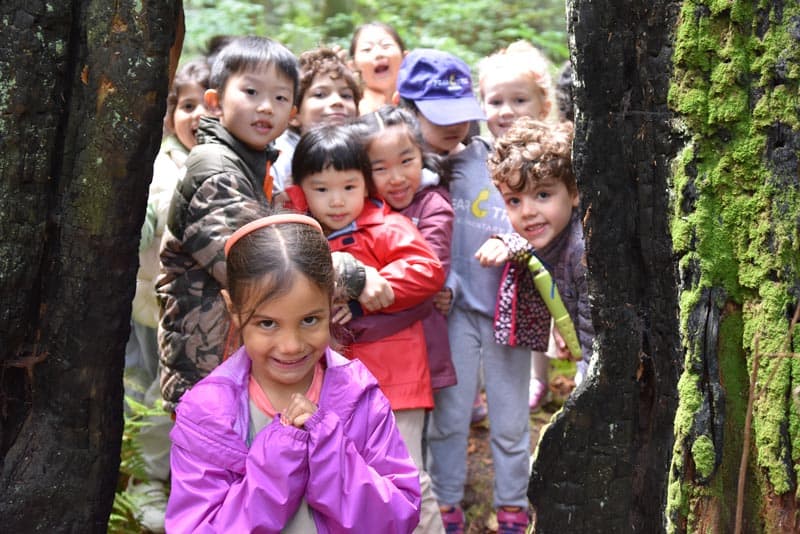
Kindergarten to Grade 1
Your child learns science, math, reading, writing, and art — through real-world projects, not worksheets.
At Pear Tree, subjects aren’t taught in isolation. They connect. Your child doesn’t sit through six disconnected lessons. They explore one big idea — and every subject builds on it.
This is The Pear Tree Method™. It’s been running since 2016. It’s built on 74 curriculum themes mapped to the BC Ministry standards. And it produces kids who actually like school.
Every day, your child gets a full hour of PE at Connaught Park with our dedicated PE teacher — plus 45 minutes of recess. When PE falls in the timetable varies, but the time is always there. Research consistently shows that children who move during the school day focus better and retain more. It’s built into the structure, not bolted on.
Students work on 2–3 themes each day, rotating between them throughout the week. During the Transportation theme, your child might compare bus routes using a real transit map (math), write about how boats connect communities (literacy), and build a model vehicle (design). Four subjects. One project. They don’t even realize they’re doing “school work.”
Music with a dedicated teacher happens daily. Lunch is hot and chef-prepared. Recess is 45 minutes at Connaught Park, rain or shine.
How Theme-Based Learning Works in K–1
Over a two-year cycle, K-1 students explore 14 themes. Each one weaves together literacy, math, science, social studies, design and technology, PE, and the arts. Students run 2–3 themes simultaneously, rotating between them across the week.
Year 1 Themes
7 of 14 themes · Year 1 of 2
Identity (My Body and Emotions)
Our bodies tell us things all the time — through what we see, hear, taste, touch, and feel inside. Your child learns that feelings like excitement, worry, or frustration show up as laughter, tears, tight muscles, or butterflies. They are not random. They are signals. Your child practises ways to calm down, use words, and ask for help. What helps each of us feel understood and cared for?
- Creates a body map showing where different emotions feel strongest — then shares it with the class and compares with classmates.
- Practises calming strategies (deep breathing, counting, movement breaks) and tracks which ones work best for them over a week.
- Acts out short scenarios showing how to use words instead of actions when feelings get big — then discusses what worked.
- Draws and labels a "feelings toolkit" poster showing the strategies they can use when they feel worried, frustrated, or excited.
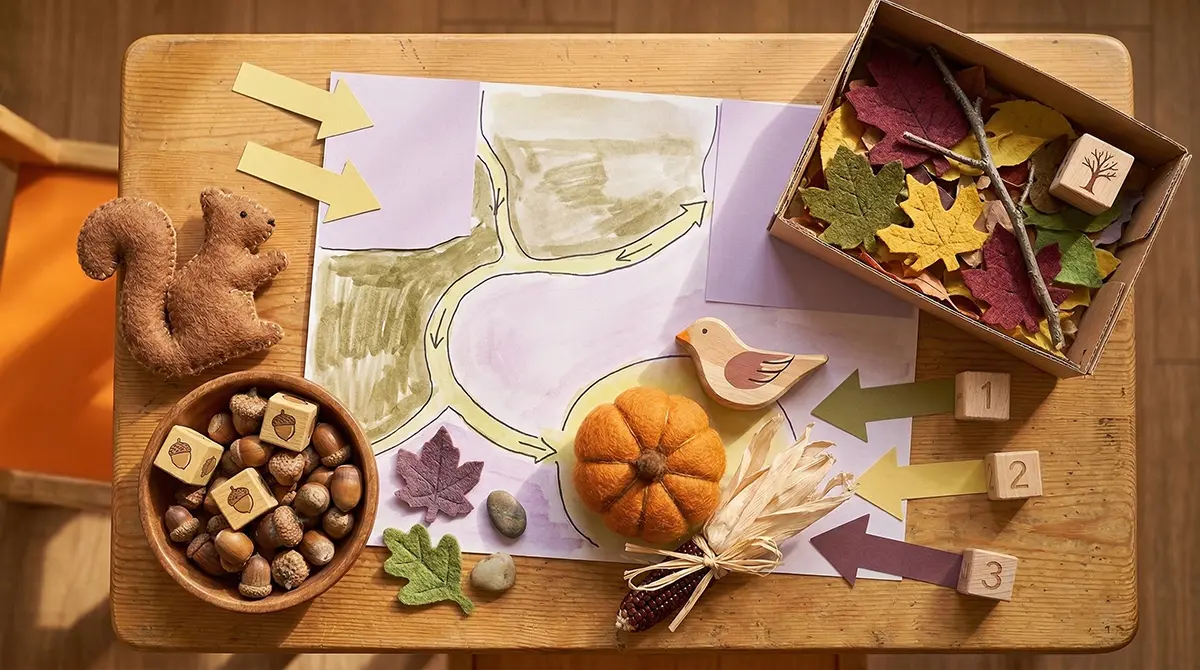
Fall
Fall is a time of great preparation. Animals store food. Trees drop their leaves. People gather what the land has grown. Your child explores how plants, animals, and humans get ready for winter. They discover that many foods we eat and festivals we celebrate come from this season. Fall plays an important role in nature’s cycle — and in our own traditions.
- Collects and sorts leaves, seeds, and natural materials from the neighbourhood — grouping them by colour, shape, size, and texture.
- Observes how a local tree changes over several weeks — drawing it each time and noticing what is different.
- Prepares a simple harvest recipe using seasonal ingredients and connects it to where the food came from.
- Creates an art piece using pressed leaves, bark rubbings, or natural dyes from fall materials.
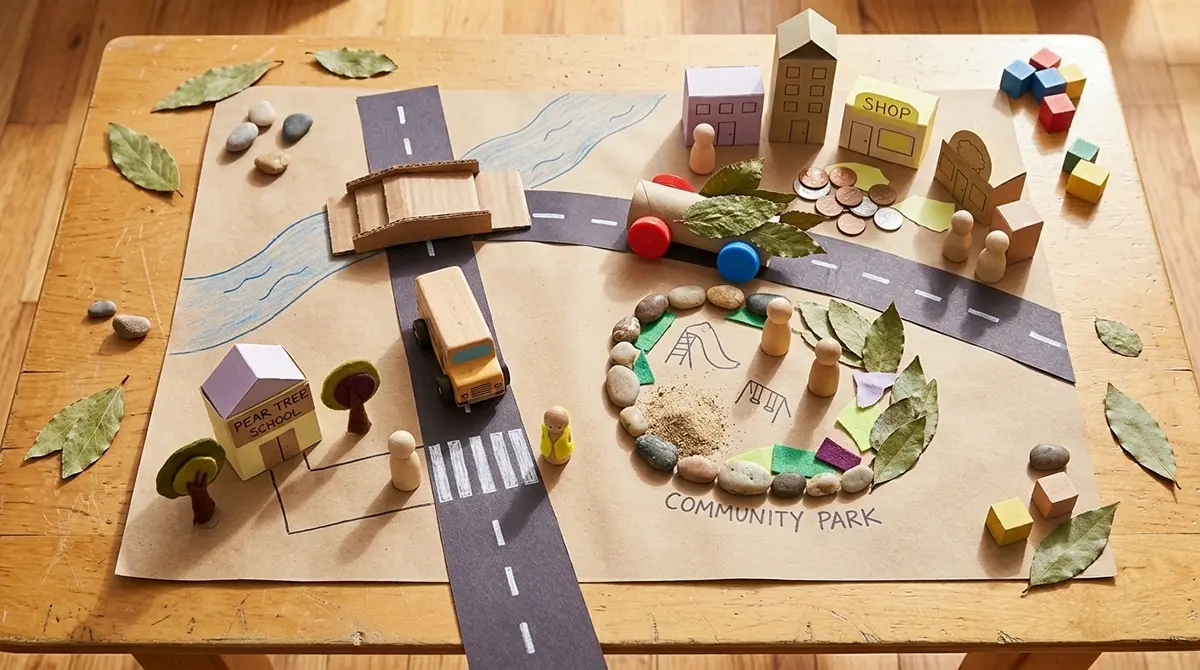
Our Community
Who keeps our neighbourhood running? Your child explores how parks, beaches, shops, streets, schools, and community helpers all work together. They look at who has access to safe play spaces, nature, housing, and gathering places — and who might be left out. When we look closely at the places near our campuses, we see that a neighbourhood is something people shape through everyday choices and care.
- Walks through the neighbourhood near campus and maps the places that help people live, work, play, and stay safe.
- Interviews a community helper (crossing guard, librarian, shopkeeper) and presents what they learned to the class.
- Builds a model neighbourhood showing the places they think every community needs — and explains their choices.
- Identifies one thing they could do to help their school community feel more welcoming — and puts it into action.
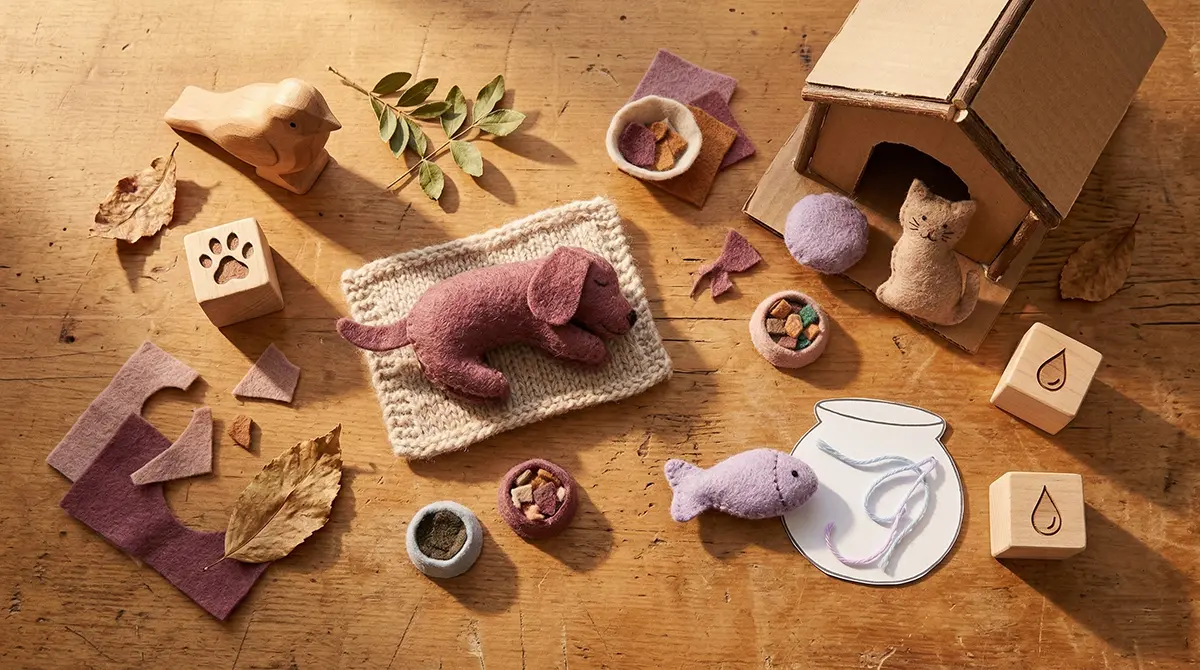
Pets
Living with animals means building a relationship based on care, attention, and trust. Dogs, cats, fish, birds — they all look different, but they all depend on humans for food, shelter, safety, and comfort. Your child learns how animals show their needs and how families and vets help care for them. Keeping a pet is not just about company. It is about responsibility to another living thing.
- Researches a specific animal — what it eats, where it sleeps, how it shows it is happy or scared — and presents a care guide to the class.
- Compares how different pets communicate (tail wagging, purring, chirping) and creates a "pet language" chart.
- Designs a dream home for an animal, including food, water, shelter, exercise, and comfort — then explains why each part matters.
- Debates a question as a class: should every family have a pet? Why or why not?

Salmon
Some animals travel thousands of kilometres, return to where they were born, and feed forests, rivers, and people along the way. Your child follows the salmon’s journey from fresh water to ocean and back. They discover how streams, bears, eagles, and Indigenous communities across BC are all connected by one species. Caring for salmon means caring for whole places, cultures, and ways of living.
- Maps the salmon's journey from river to ocean and back — labelling the dangers and helpers at each stage.
- Observes salmon eggs developing in a classroom tank (or studies the cycle through close-up photos and video).
- Learns how Indigenous communities in BC have cared for salmon for thousands of years — and presents one tradition to the class.
- Creates a food web showing how bears, eagles, trees, rivers, and people all depend on salmon.
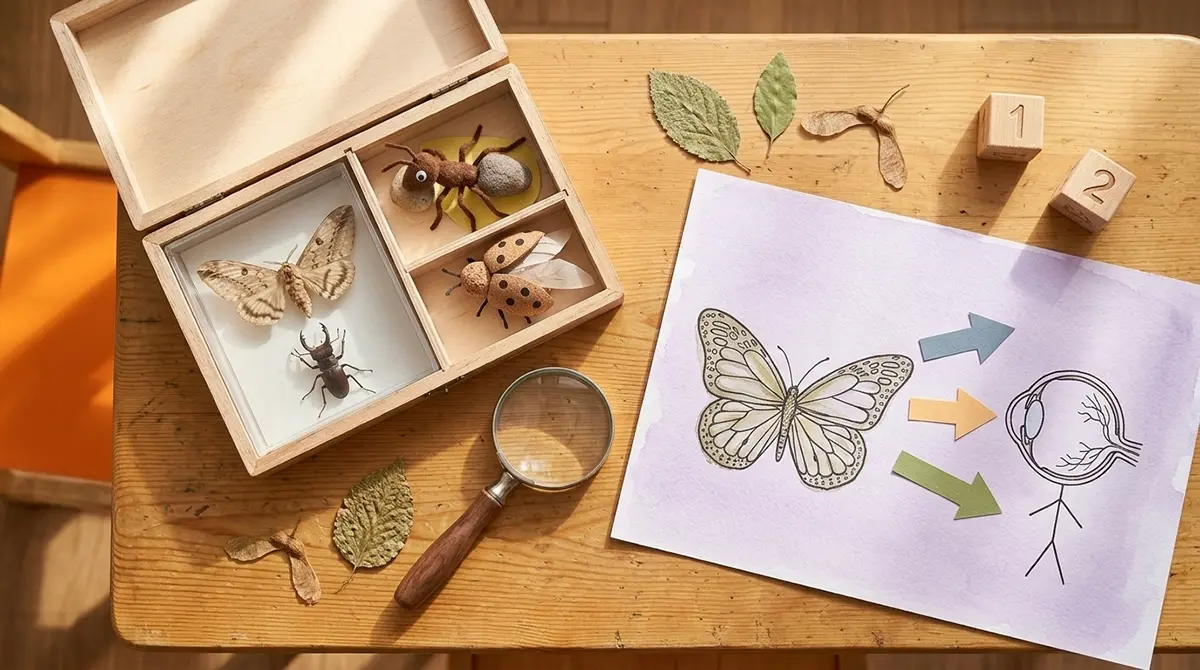
Insects
Some of the smallest animals on Earth do some of the biggest jobs in nature. Over millions of years, insects have adapted into an amazing variety of shapes, colours, and behaviours. They pollinate plants, break down waste, and feed other living things. Your child discovers that insect wings, eyes, and teamwork also inspire human inventions. The creatures we overlook may be the most important of all.
- Observes real insects up close (with magnifying glasses or macro photography) and draws detailed scientific diagrams of body parts.
- Compares how different insects survive — camouflage, speed, teamwork, stingers — and presents their findings.
- Designs an invention inspired by an insect adaptation (e.g., a sticky pad from a beetle, a light from a firefly).
- Builds an insect habitat model showing what a specific species needs to eat, hide, and reproduce.
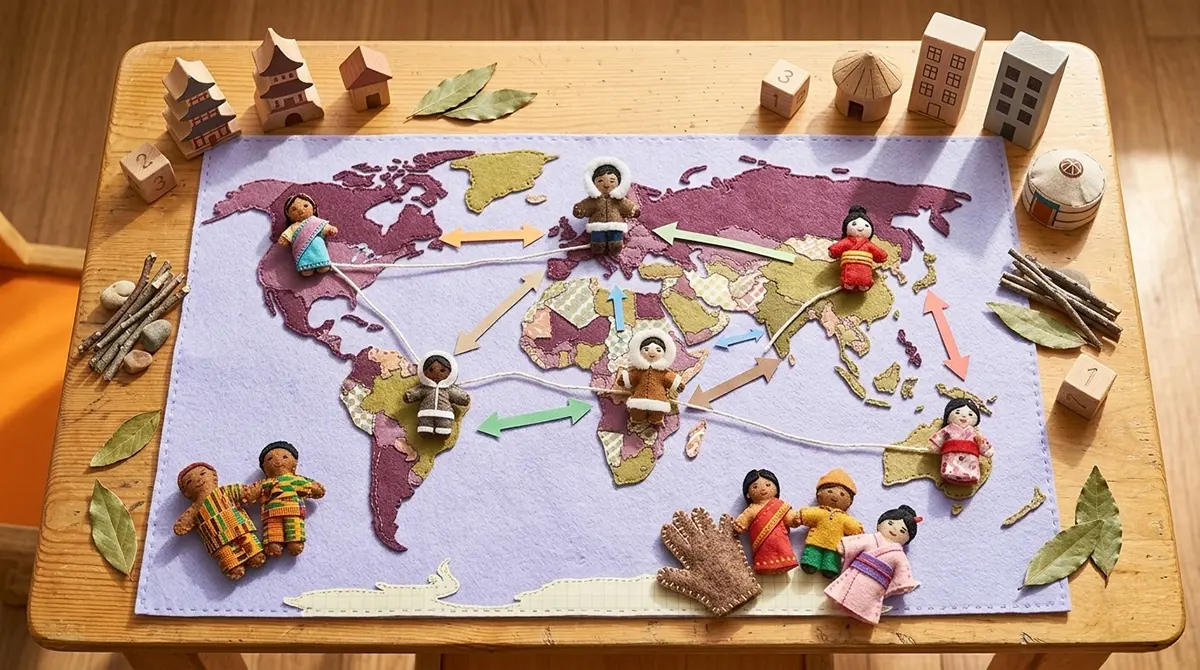
It's A Small World
Even though children around the world may live in different places, speak different languages, eat different foods, and celebrate in different ways, they are connected by many of the same needs, feelings, and hopes. Kids explore how children in different cultures learn, play, communicate, and care for one another — and begin to see that what feels “normal” is shaped by experience, family, and community. When we notice whose ways are familiar and whose are new, we start growing a wider, more thoughtful view of the world.
- Researches how a child in another country spends a typical day — what they eat, how they get to school, what they play — and presents it to the class.
- Learns a greeting, a song, or a counting system from another language and teaches it to classmates.
- Compares a celebration or holiday from another culture with one their own family observes — noticing what is similar and what is different.
- Creates a class book showing how children around the world share the same needs even when their daily lives look different.
Year 2 Themes
7 of 14 themes · Year 2 of 2
Identity (My Social Self and Belonging)
How do our choices help others feel like they truly belong? Your child explores friendship, play, and everyday experiences in family, school, and community life. They learn that kindness, sharing, and fairness help people feel safe, included, and valued. They practise expressing their own feelings and noticing the feelings of others. Belonging is not automatic — it is something we create through how we treat one another.
- Practises solving a real classroom disagreement using words, listening, and compromise — then reflects on what worked.
- Creates a "belonging recipe" showing the ingredients a group needs to make everyone feel included.
- Role-plays scenarios where someone is left out — then brainstorms better choices as a group.
- Writes or draws a commitment about one thing they will do to help someone feel welcome this week.
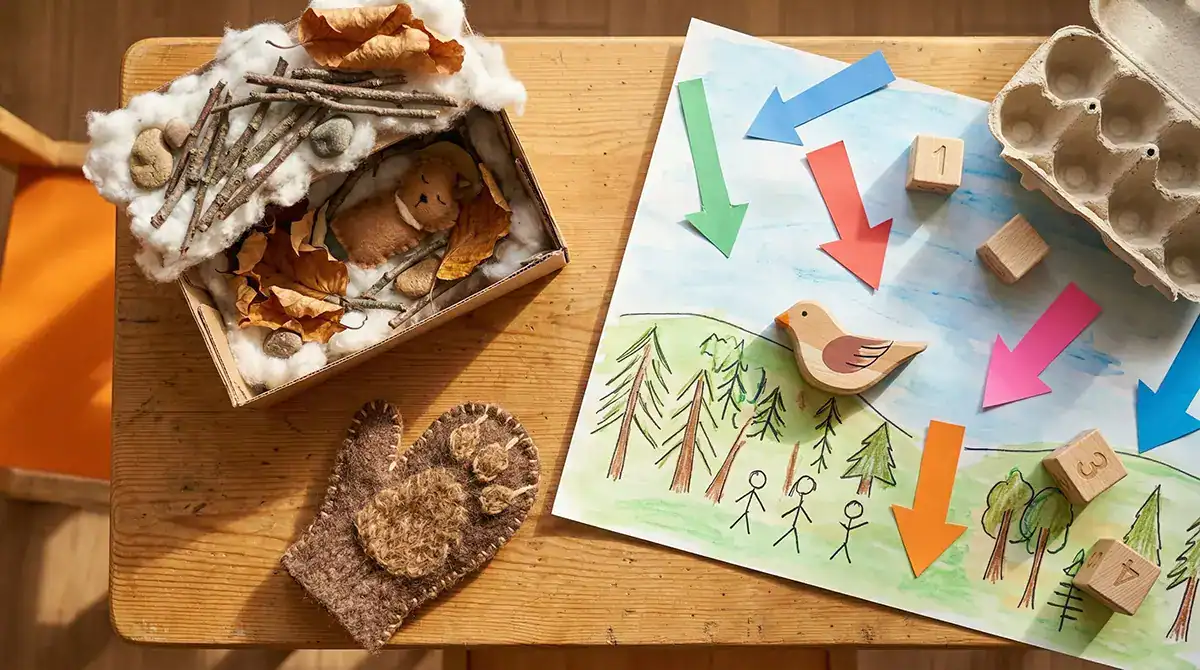
Thrive & Survive
When the world changes — colder nights, less food, shorter days — living things make smart plans to stay alive. Some travel to warmth. Some power down. Others change their bodies to fit the season. Your child studies these survival strategies in birds, bears, insects, and their own families. If nature is a teacher, what could we build, protect, or practise so families and wildlife can thrive side by side?
- Researches one animal's winter survival strategy (hibernation, migration, or adaptation) and presents it with drawings and facts.
- Tracks daylight hours and temperature over several weeks — graphing the changes and connecting them to animal behaviour.
- Compares how their own family prepares for winter (clothes, food, routines) with how an animal species does the same.
- Designs a shelter or food storage system for an animal, explaining how it would help them survive the cold.

Transportation
Getting from here to there is how we share, learn, and take care of each other. Your child compares walking, wheels, and wings — how they work, how energy is used, and the rules that keep us safe. They notice who finds it easy or hard to get around. They also learn how designs from nature can help us imagine kinder, smarter ways to move.
- Sorts different types of transport by how they move (wheels, wings, water, rails) and how much energy they use.
- Maps how they get to school — then compares their route with classmates to see who walks, bikes, drives, or takes transit.
- Designs a new way to move people or things, inspired by an animal or a natural force (wind, water, gravity).
- Investigates road safety rules near the school and creates a poster teaching younger students how to stay safe.
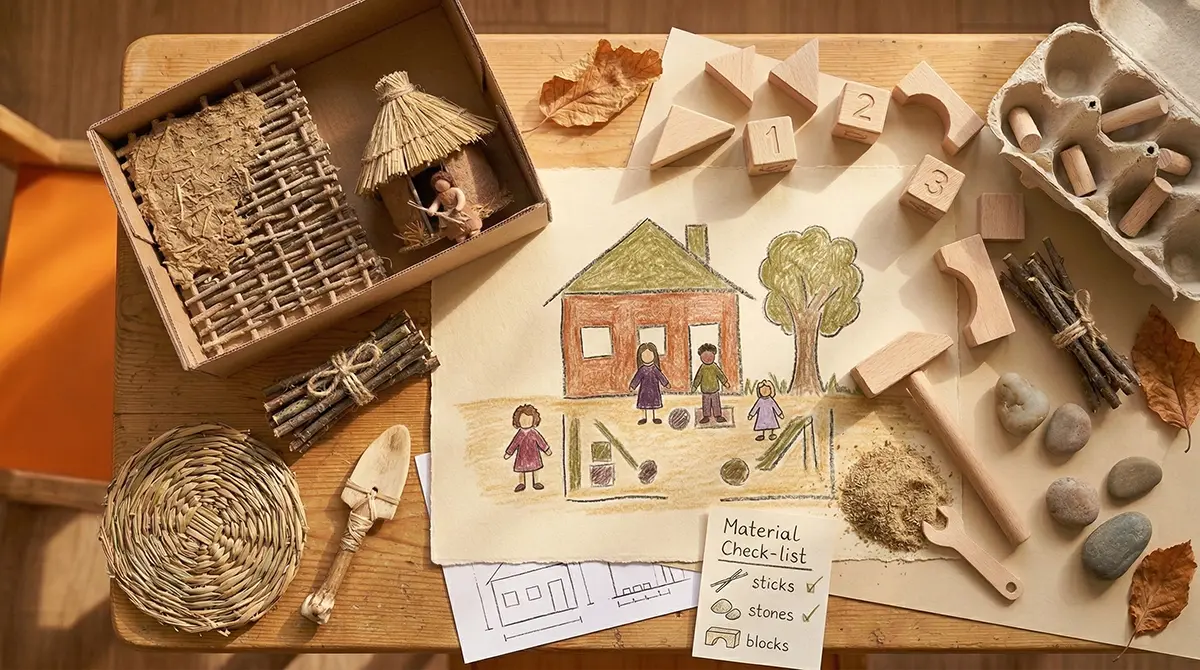
Construction
Every building starts as an idea and a pile of materials. Then it becomes a place where real life happens. Your child plans, measures, and works safely with tools. They turn wood, stone, metal, and cardboard into homes, playgrounds, bridges, and schools. They discover that the choices we make about what we take, waste, and reuse really matter.
- Plans, measures, and builds a structure using real tools and materials — testing whether it can hold weight, stand up to wind, or keep water out.
- Investigates what different buildings are made of (wood, stone, concrete, glass) and why builders choose each material.
- Compares how people long ago built shelters from local materials with how buildings are made today.
- Designs their dream building — drawing it to scale and labelling the materials, rooms, and purpose of each part.

Woodland Animals
In the woods near us, squirrels hide acorns, woodpeckers find bugs, and owls patrol on silent wings. Your child discovers how animal bodies and behaviours fit the forest: cup-shaped ears, whisper-soft wings, stripes that disappear. They learn how our footsteps, snack scraps, and pets can make the difference between a safe home and a scary place for these neighbours.
- Identifies three woodland animals found near campus — researching what they eat, where they sleep, and how they survive.
- Observes animal signs on a nature walk (tracks, nests, chewed bark, feathers) and records them in a field journal.
- Creates a poster showing how one woodland animal's body is specially designed for its habitat.
- Writes a class promise about how to be a good neighbour to the animals that share our space.

Go Green
The things we throw away do not vanish. They move through bins, trucks, sorting centres, and sometimes into rivers or animal habitats. Your child explores the symbols on packaging and looks at the waste their household creates. Reducing, reusing, and recycling helps them understand which choices care for the Earth and which ones create more harm. When we notice what we waste, we can also wonder: what kind of future are our habits building?
- Conducts a waste audit of their classroom or lunchbox — sorting items into reduce, reuse, recycle, and landfill categories.
- Reads the recycling symbols on packaging and investigates which items actually get recycled and which do not.
- Designs a poster or short presentation teaching other students one simple way to reduce waste.
- Tracks their family's waste for a week and presents what they learned — including one change they plan to make.
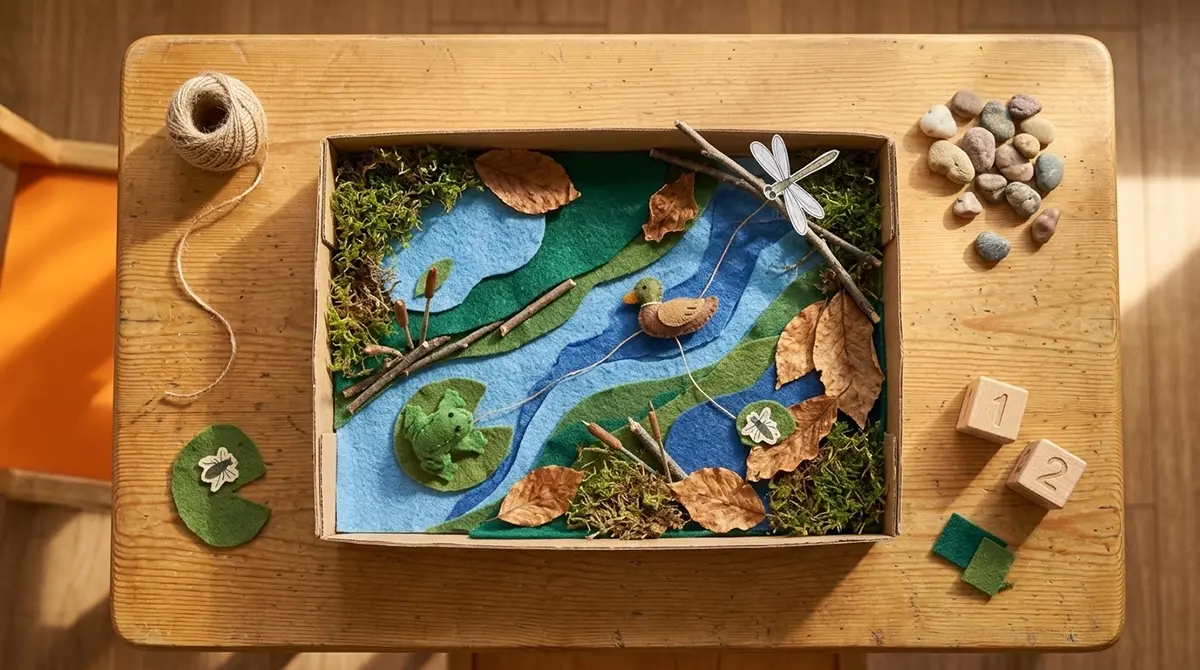
Wetlands
Some places are both land and water at the same time. Frogs, birds, insects, fish, and plants all depend on one another to live there. Your child discovers that wetlands help clean and slow water, give animals places to feed and hide, and support partnerships where one living thing helps another survive. When one part is disturbed, many others are changed too.
- Builds a model wetland showing water, soil, plants, and animals — then explains how each part depends on the others.
- Investigates how wetlands clean water naturally — testing muddy water filtered through soil, sand, and gravel.
- Identifies three animals that depend on wetlands and presents how each one uses the habitat differently.
- Discusses what happens when people drain or pave over wetlands — and draws before-and-after pictures showing the impact.
Themes rotate on a two-year cycle. Your child covers all 14 by the end of Grade 1.
Year 1 of 2 — 7 of 14 themes
What Your Child Gets
- They can stand up and present. K-1 students give multiple presentations to classmates and parents — on topics they chose and researched themselves.
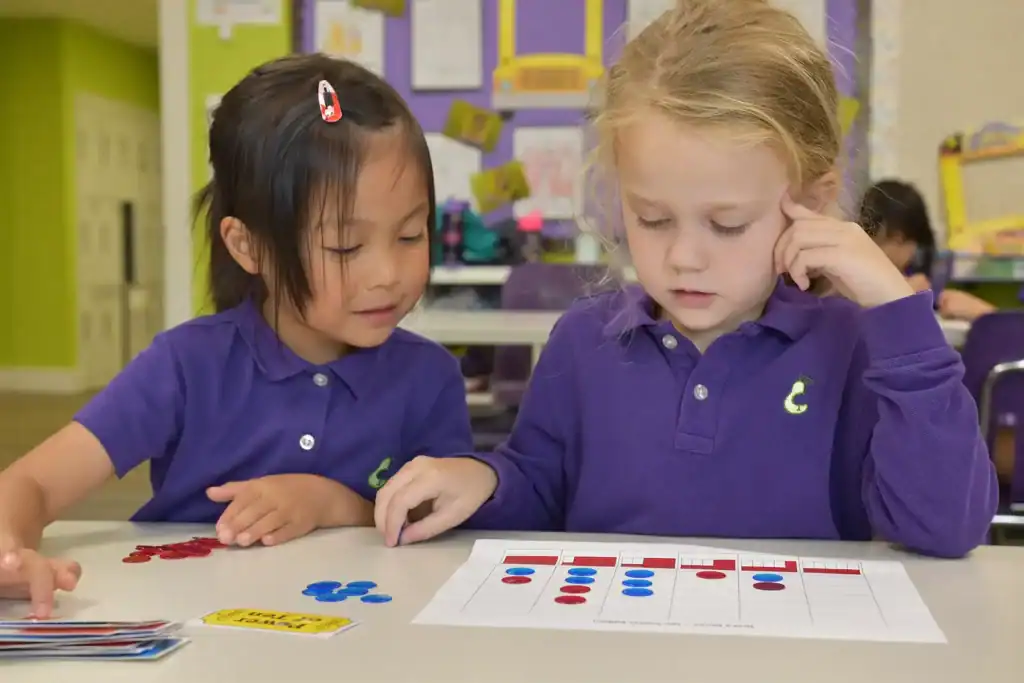
- They read, write, and do math with purpose. Literacy and numeracy aren’t drills. Your child reads about volcanoes because they’re studying the Earth. They measure because they’re building something real.
- They know how to work with others. In a class of 16, no one gets overlooked. Students collaborate, share, and learn to disagree respectfully.
- They actually like school. When learning connects to real life, kids stop asking “why do I have to learn this?” They already know.
A Typical Day in K-1
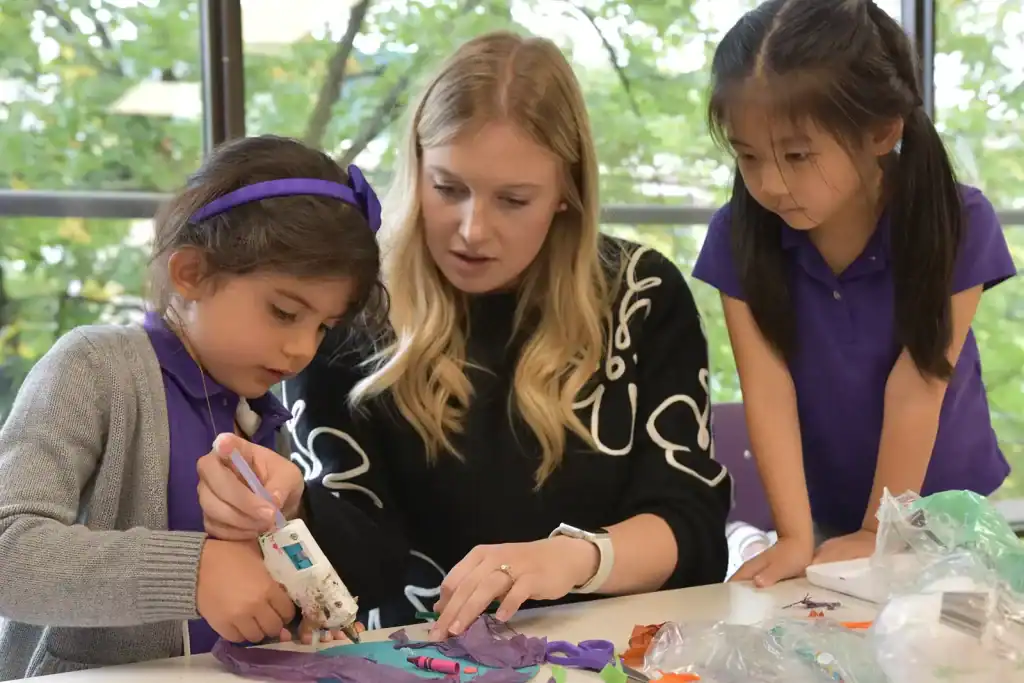
Themes run in parallel — not one at a time. On any given day, your child works on two or three different themes.

Beyond the Classroom
Daily PE — 1 Full Hour, Every Day
Every single day — not twice a week — your child gets a full hour of PE at Connaught Park with our dedicated PE teacher.
At K-1, PE builds the physical foundations young children need: balance, coordination, running, jumping, throwing, catching. Activities rotate through gymnastics, obstacle courses, ball games, yoga, and ice skating. By the end of the year, your child has tried more sports than most kids try by Grade 5.
Hot Lunch — Made Fresh Daily
Every student eats a fresh, hot lunch prepared in-house by our Red Seal certified chef. No packed lunches needed. The menu changes monthly and accommodates all dietary needs — gluten-free, vegetarian, allergy-specific.
During themes like Healthy Bodies, Healthy Minds, food connects to learning. Students explore nutrition and food science as part of the curriculum — not as an afterthought.
After-School Co-Curriculars
After 3:15 PM, your child can stay for optional co-curricular programs that change each term. At K-1, activities focus on exploration, not competition — art, performing arts, nature discovery, cooking, music, or beginner martial arts, depending on the term.
Before & After School Care
Before School Care: 7:30–8:00 AM · $15/day. After School Care: 3:30–5:00 PM · $30/day. Available any combination of days.
Don't take our word for it
“Our child wakes up every day eager to get to school. The best way to know if an environment is safe and nurturing is if your child wants to go.”
“Pear Tree is the best option in the city for busy parents. Their curriculum is well-rounded in arts and athletics — which really takes the pressure off finding extracurricular activities. The in-school chef saves me the time and mental energy that comes with meal prep.”
“Our daughter is in Kindergarten and she loves going to school. We are more than five-star happy with our Pear Tree experience.”
See It for Yourself
The best way to understand what makes Pear Tree different is to visit. Walk through a classroom during a theme. Watch the kids. Talk to the teachers. You’ll know within 10 minutes whether this is right for your child.
Tour our schoolContact Us
Main Campus (West Broadway)
Suite 215 (and Suite 201)
2678 West Broadway
Vancouver, B.C. V6K 2G3

Yaletown Campus
1035 Cambie St
Vancouver, B.C. V6B 2E2
