Since 2012

74 Themes

K–9 Program

Your child doesn't learn in boxes.
Why should school teach in them?

When your child discovers dinosaurs, they don't just think about science. They think about size, time, geography, art, survival — everything at once. That's how kids naturally learn. At Pear Tree, school actually works that way. We call it The Pear Tree Method™.

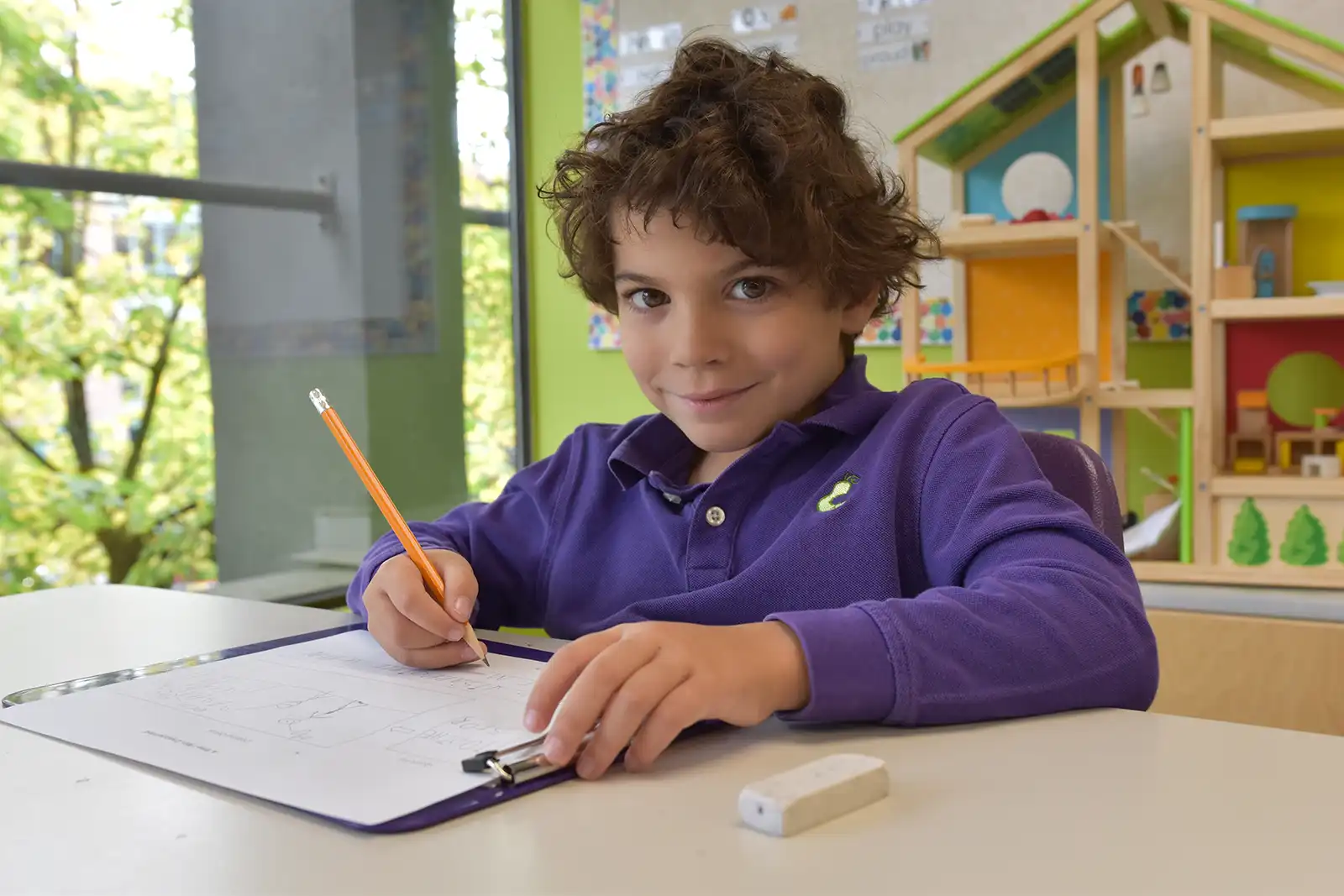
Young boy smiling while writing in a notebook at school.

How It Actually Works

In most schools, your child has math at 9, science at 10, English at 11 — and none of it connects. At Pear Tree, we teach through real-world themes that bring subjects together naturally.

1

Students explore a real-world theme

Each theme connects to something real — the Solar System, Construction, Natural Resources, Flight. Not a textbook chapter.

2

Every subject connects to that theme

Math, science, English, social studies, art, and design all weave through the same theme. Nothing is isolated. Everything has context.

3

Students produce real work

Presentations, research, prototypes, artwork. You see what your child actually learned — not just a letter grade.

See It in Action

The Solar System Theme

Grade 2/3 · One theme. Four subjects. Real learning.

Science

Field trip to the H.R. MacMillan Space Centre. Workshop on light from the Sun. Designed a Mercury survival shelter.

Math

Tracked Moon phases daily. Graphed cycles. Applied measurement to the STEM shelter project.

English Language Arts

Researched planets. Wrote and delivered two presentations — one on Venus, one as a final presentation to parents.

Art & Design

Created artwork on Moon phases. Built scale models. Designed the Mercury shelter prototype.

That's science, math, ELA, and art — all through one theme. Students didn't switch between disconnected classes. They built understanding that sticks because every piece connects.

Now See It at Grade 6/7

The Oil Theme

Grade 6/7 · Six subjects. One question: What happens when oil runs out?

Science

Students trace crude oil from formation to refinery. They investigate renewable vs. non-renewable energy sources and model the carbon cycle.

Math

They calculate per-capita energy consumption across countries, graph production-to-demand trends, and model what happens when supply can no longer keep up.

English Language Arts

Students research and write an argued position paper on a specific oil-related policy. They present their case to the class and respond to cross-examination.

Social Studies

They examine how oil wealth shapes political power, trace the causes of specific resource conflicts, and debate who benefits when pipelines are approved.

ADST

Students map the lifecycle of an everyday petroleum product from raw material to landfill — and propose a redesign that reduces dependency.

Ethics & Critical Thinking

They argue both sides of a real dilemma: economic development vs. environmental protection. No easy answers — just evidence and reasoning.

Same method. Higher stakes. In Grade 2, your child tracked Moon phases. By Grade 6, they're modelling global energy crises and arguing policy. The method scales — and so does your child.

Why This Works Better

Kids remember what matters to them

When students learn about gravity during a Flight theme, it's not abstract. They're calculating wing lift. They're building models. The concept sticks because it has a reason to exist.

No subject gets left behind

A child who loves science might tune out in English class. At Pear Tree, they write about science. They present their findings. Every subject feels relevant because it is.

Consistency across classrooms

The Pear Tree Method™ isn't one teacher's style — it's a school-wide system. Every teacher follows the same method, backed by the same curriculum documents. Your child's experience doesn't depend on getting lucky.

You can see the learning

Students produce real deliverables — presentations, projects, prototypes, research. You don't wait for a report card to know what your child is learning. You can see it.

Designed for Depth — Not Repetition

Not 74 Themes. Six Threads.

The same big ideas return at every grade band — but each time, the question gets harder, the thinking gets deeper, and the stakes get more real. Your child isn't repeating a unit. They're continuing a conversation that started in Kindergarten.

The Identity Thread

Self → Society → Systems  ·  K–1 through Grade 8–9  ·  8 encounters across nine years

K-1 Identity: My Body and Emotions — student workK–1
K-1 Identity: My Social Self — student workK–1
Grade 2-3 Identity: Culture and Community — student work2–3
Grade 4-5 Identity: Personal Strengths — student work4–5
Grade 4-5 Identity: Bias and Stereotypes — student work4–5
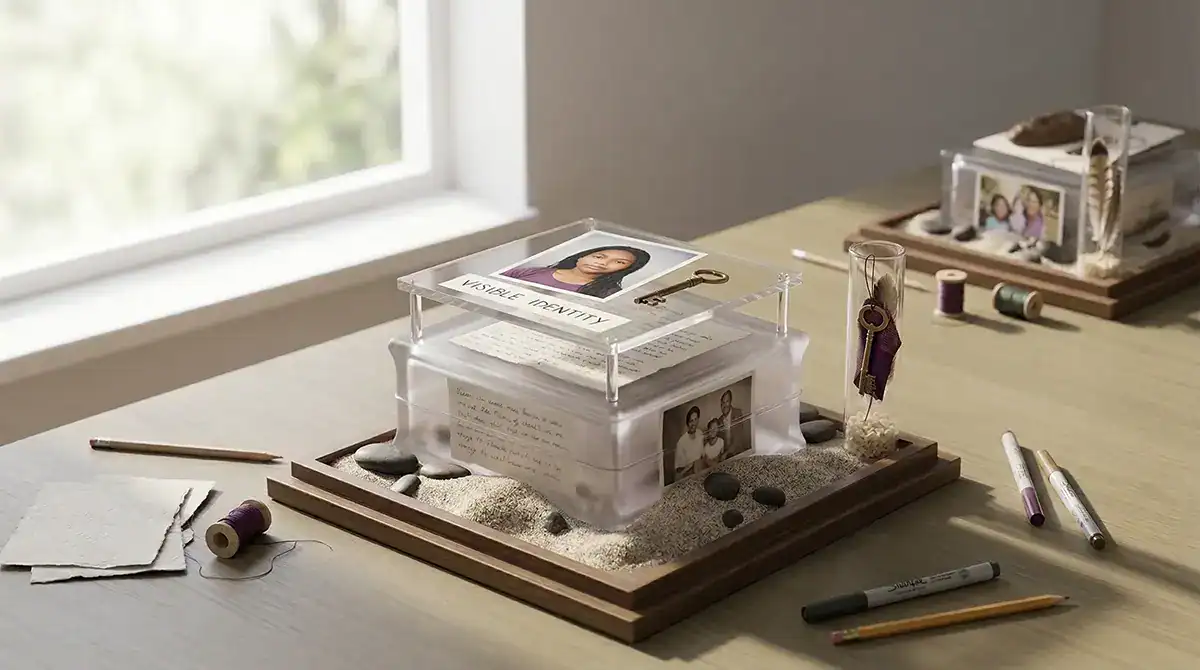
Grade 6-7 Identity: Visible vs Invisible — student work6–7
Grade 6-7 Identity: Digital Identity — student work6–7
Grade 8-9 Identity: Who We Are Allowed To Be — student work8–9
K–1Yr 1

Who am I — and what is my body telling me?

My Body and Emotions

Emotions as physical signals. Naming feelings. Learning to calm down, use words, and ask for help.

K–1Yr 2

How do my choices help others belong?

My Social Self and Belonging

Friendship, play, sharing, fairness — belonging isn't automatic. It's something we create through how we treat one another.

2–3

What culture and community am I part of?

Culture and Identity

Heritage, languages, traditions, and stories that shape daily life. How knowing your own story helps you understand others.

4–5Yr 1

What kind of learner am I becoming?

Personal Strengths and Growth

Strengths, habits, responses to difficulty. Growth isn't about being "good at" something — it depends on practice, self-discipline, and courage.

4–5Yr 2

Who decides what's "normal" — and what happens when you don't fit?

Bias, Stereotypes, and Social Identity

Bias, stereotypes, gender, race, class — how labels open doors for some and create barriers for others. The difference between equality and equity.

6–7Yr 1

What do people assume about you — and what can they never see?

Visible vs. Invisible Identity

The cultural iceberg: values, beliefs, family stories, and experiences all live below the surface. What happens when identities are misunderstood or judged.

6–7Yr 2

Who are you online — and who decides?

Media, Technology, and Digital Identity

Algorithms, platforms, digital footprints. How media and technology shape self-expression, relationships, and the pressure to be seen in certain ways.

8–9

Who are we allowed to be — and who decides?

Who We Are Allowed To Be

Laws, institutions, and power structures that reward or police identity. The systems that shape who gets to be fully themselves — and who doesn't.

9-Year Arc

Body → Relationships → Community → Cultural roots → Personal agency → Social structures → The invisible self → The digital self → Systems of power

The Environmental Reasoning Thread

Observation → Systems → Responsibility  ·  K–1 through Grade 8–9  ·  8 encounters across nine years

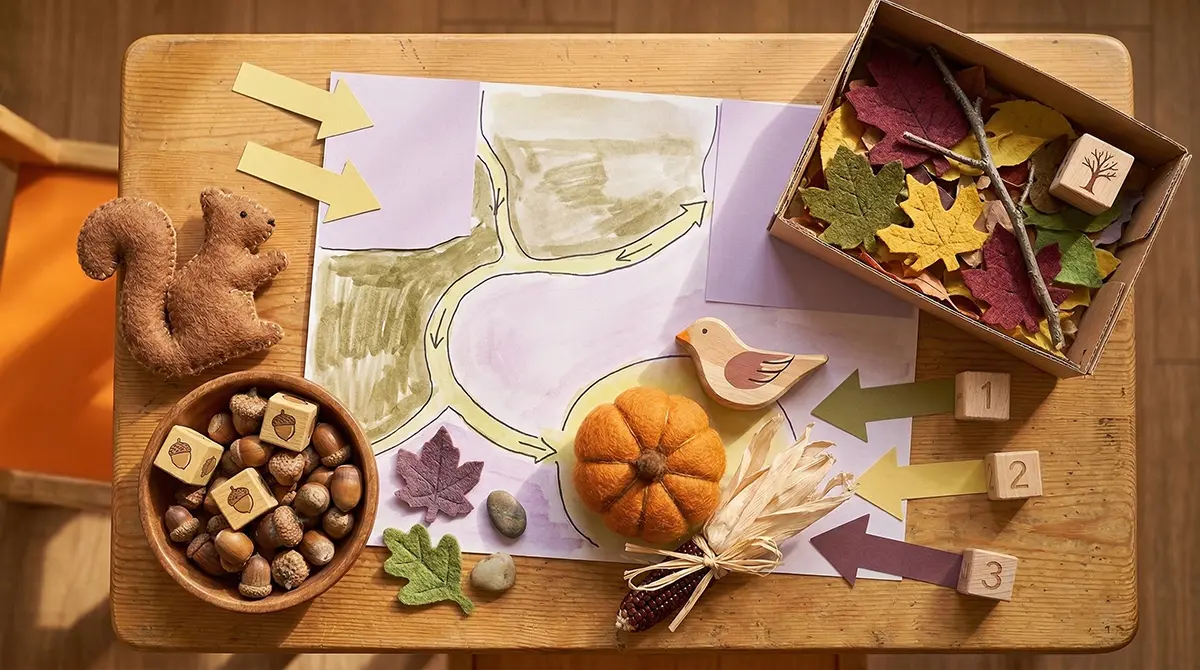
K-1 Environmental: Fall — student workK–1
K-1 Environmental: Go Green — student workK–1
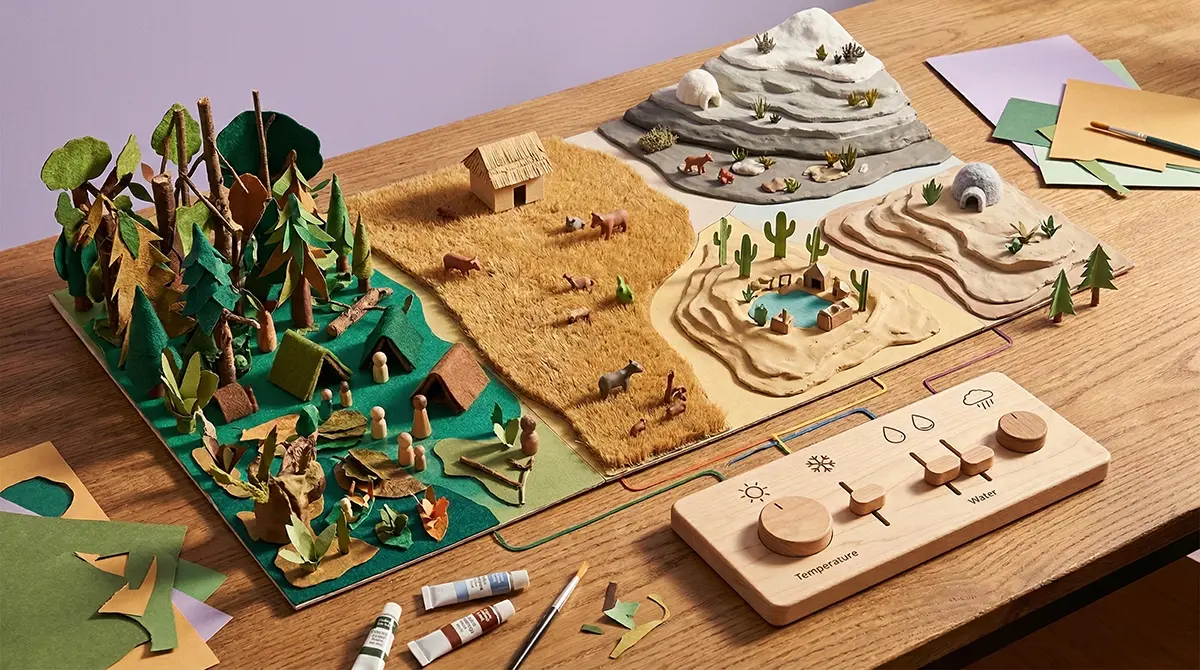
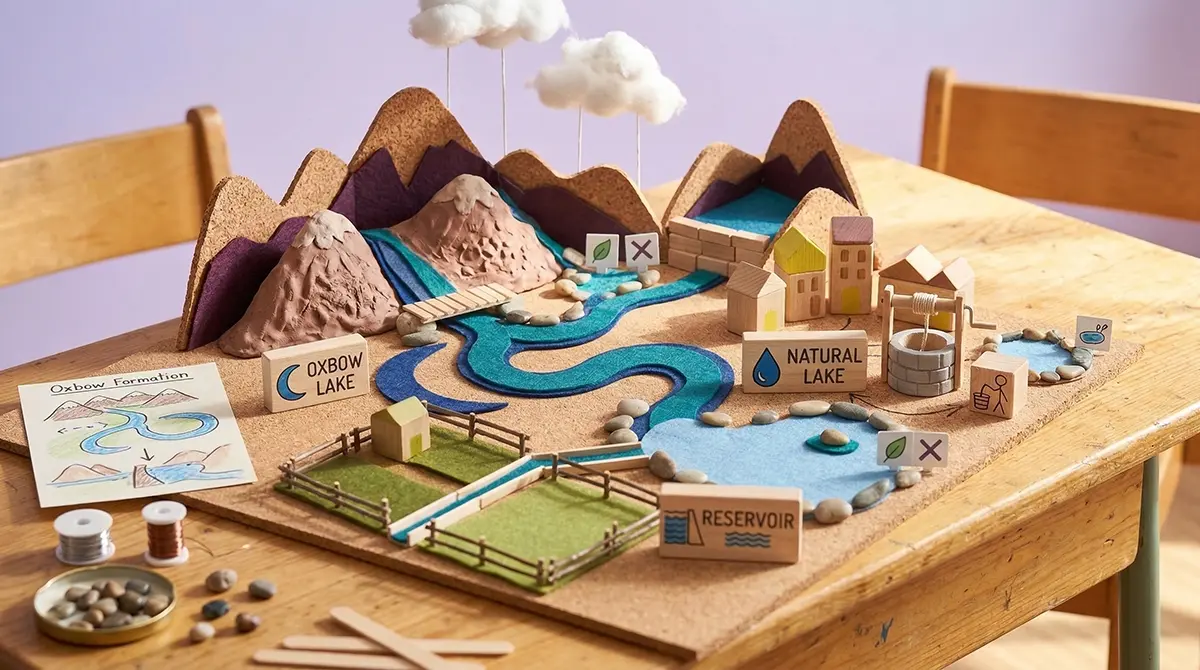
Grade 2-3 Environmental: Biomes — student work2–3
Grade 2-3 Environmental: Water — student work2–3
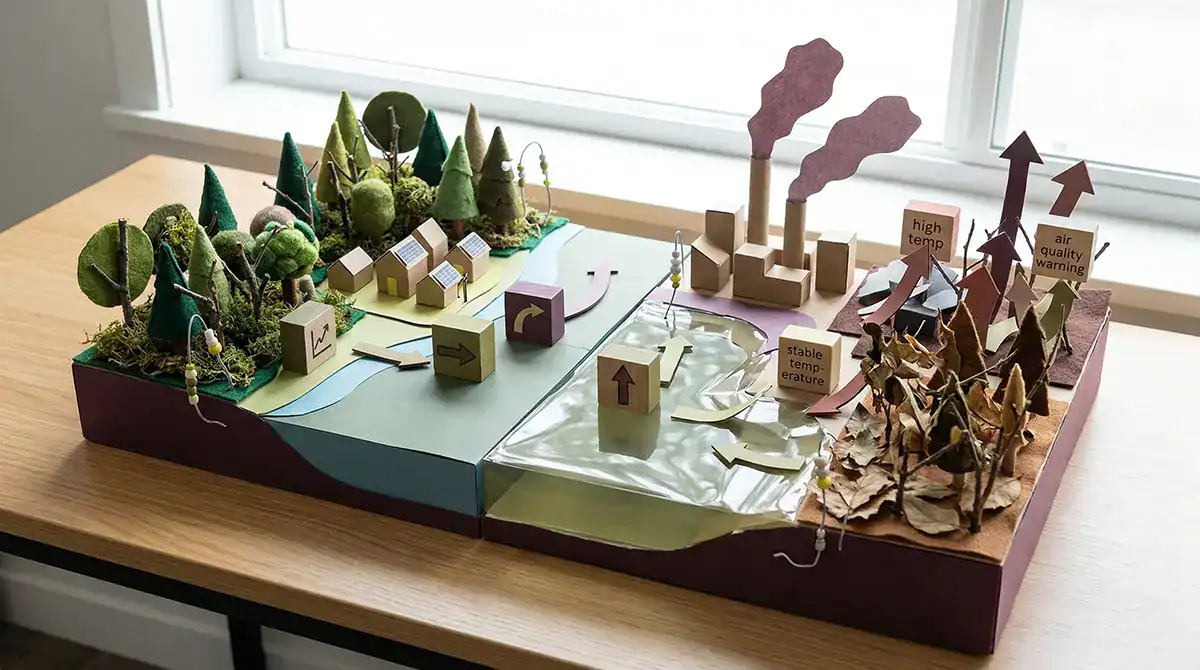
Grade 4-5 Environmental: Climate Change — student work4–5
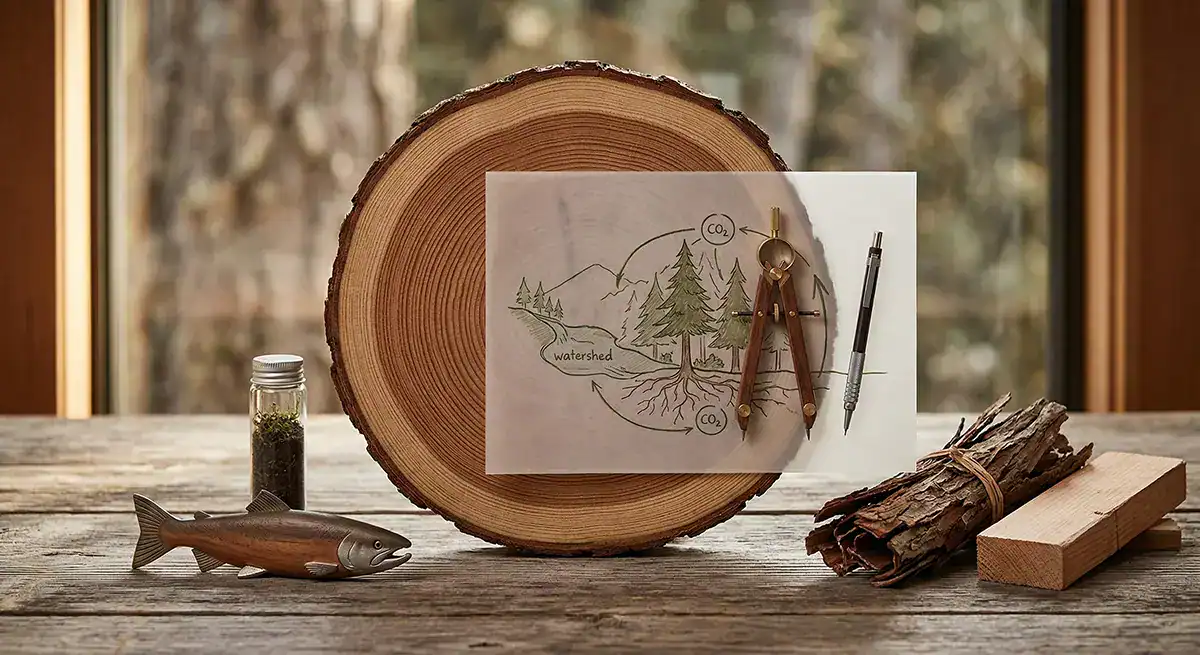
Grade 6-7 Environmental: Our Forests — student work6–7
Grade 6-7 Environmental: Plastics — student work6–7
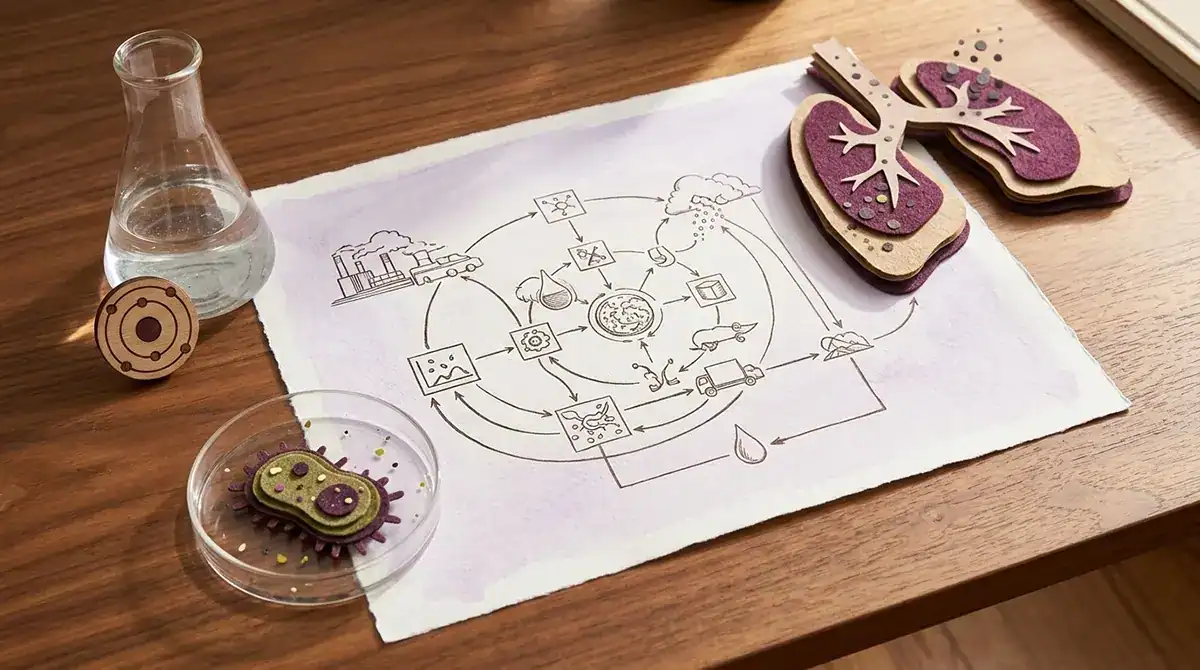
Grade 8-9 Environmental: Pollution — student work8–9
K–1

What changes when the seasons change — and why does it matter?

Fall

Animals store food. Trees drop leaves. People gather the harvest. Nature's cycle as first science.

K–1

What happens to the things we throw away?

Go Green (Eco Team)

Noticing waste. Small habits with real environmental impact. Becoming an eco team.

2–3

How do living things depend on where they live?

Biomes

Ecosystems as interconnected habitats. What happens when one part changes.

2–3

Who owns the water — and who goes without?

Water

Access, pollution, scarcity. Water as the resource that connects everything.

4–5

Are we changing the planet faster than it can adapt?

Climate Change

Human activity altering planetary systems. Data, evidence, and what the science actually says.

6–7

What do we owe the forests that sustain us?

Our Forests

BC forests as ecological, economic, and cultural systems. Competing interests, hard trade-offs.

6–7

What does it cost to make something that lasts forever?

Plastics

Material science meets environmental consequence. Plastics as a design problem, not just pollution.

8–9

Who is responsible when the damage is invisible?

Pollution

Molecular chemistry of contamination. Systemic responsibility. Who pays, who profits, who suffers.

9-Year Arc

Noticing nature → Ecosystem relationships → Resource systems → Planetary impact → Material science → Molecular understanding → Systemic responsibility

The Civic Reasoning Thread

Local → National → Structural  ·  K–1 through Grade 8–9  ·  8 encounters across nine years

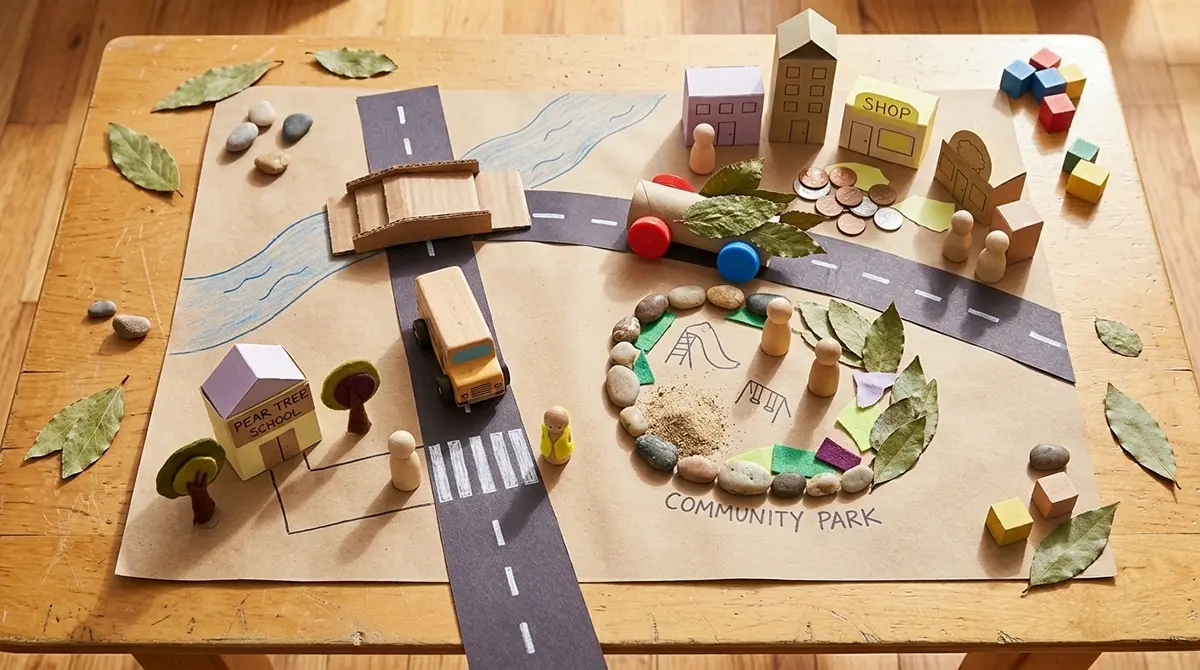
K-1 Civic: Our Community — student workK–1
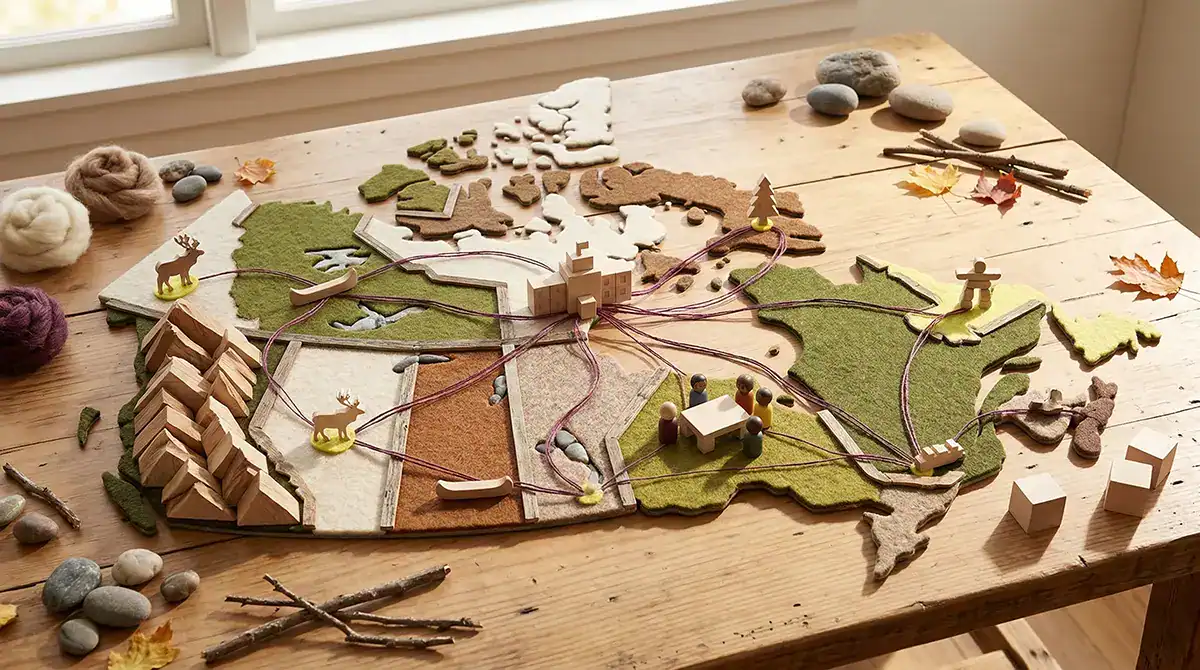
Grade 2-3 Civic: O Canada — student work2–3
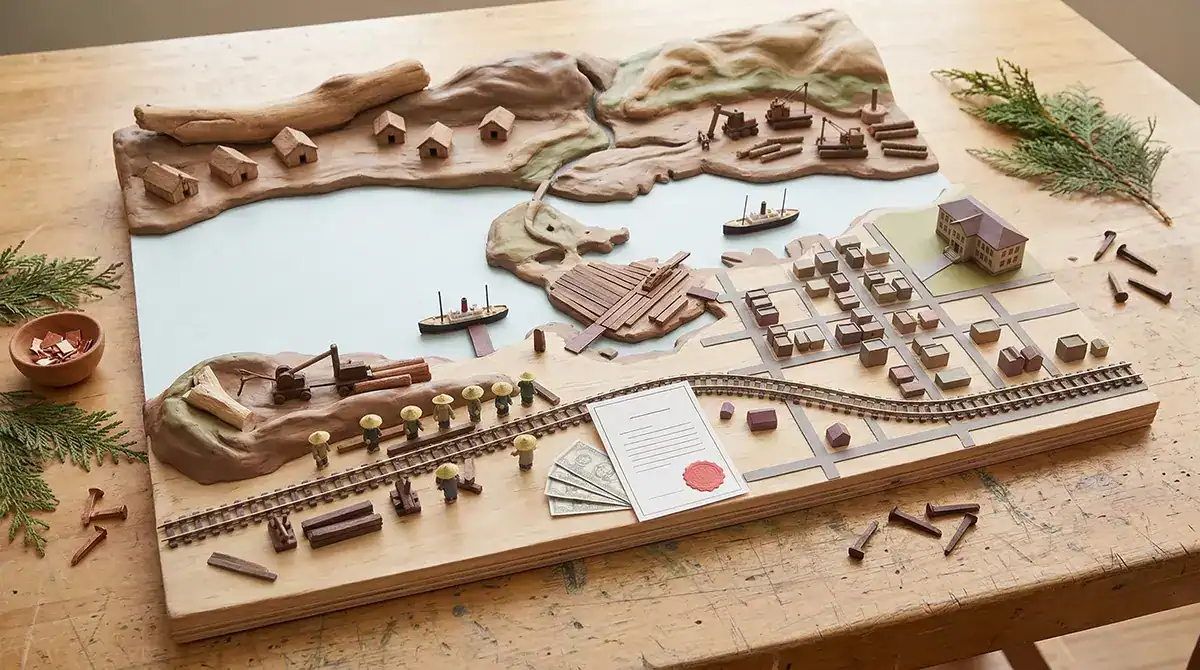
Grade 4-5 Civic: Canada Then — student work4–5
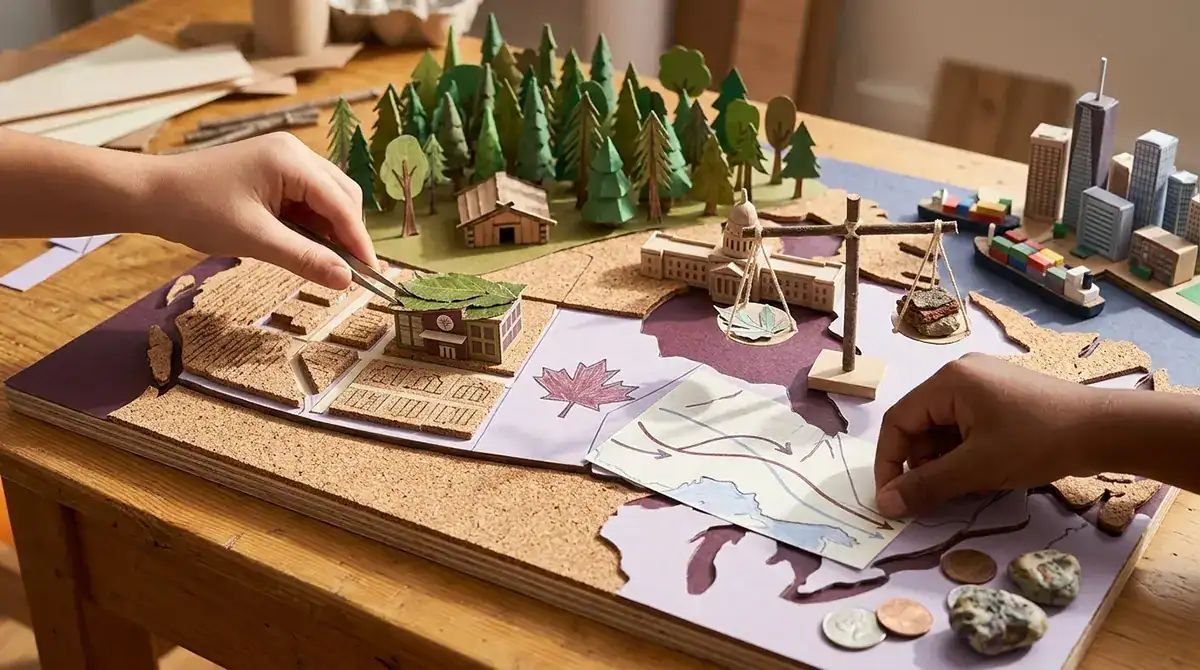
Grade 4-5 Civic: Canada Now — student work4–5
Grade 6-7 Civic: The Tenements — student work6–7
Grade 6-7 Civic: Urban Design — student work6–7
Grade 8-9 Civic: Cities Under Stress — student work8–9
Grade 8-9 Civic: Revolution and Resistance — student work8–9
K–1

What makes a neighbourhood work — and who gets left out?

Our Community

How communities function. Who belongs, who helps, and what happens when someone is missing from the picture.

2–3

What truly holds a country together?

O Canada

National identity, stereotypes, and who shapes the story. What does it mean to belong to a country still being built?

4–5Yr 1

Who benefited, who was harmed — and how do those choices still shape Canada today?

Canada Then

Colonial history. Residential schools. The head tax. Who paid the costs of 'progress' and whose stories were left out.

4–5Yr 2

What kind of country is Canada still becoming?

Canada Now

Indigenous rights, immigration, climate, housing. A country shaped every day by who is listened to and what is protected.

6–7Yr 1

What does a city reveal about its values?

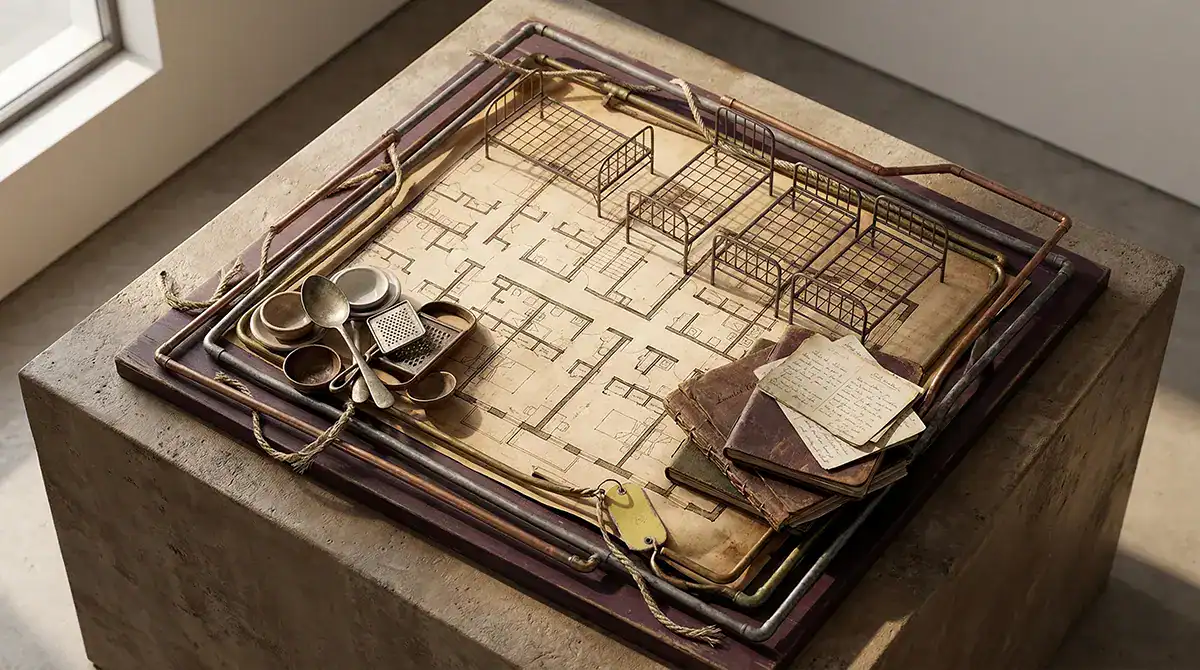
The Tenements

Crowded rooms, shared kitchens, hard labour. Housing as tied to health, dignity, race, and whose stories a city preserves or erases.

6–7Yr 2

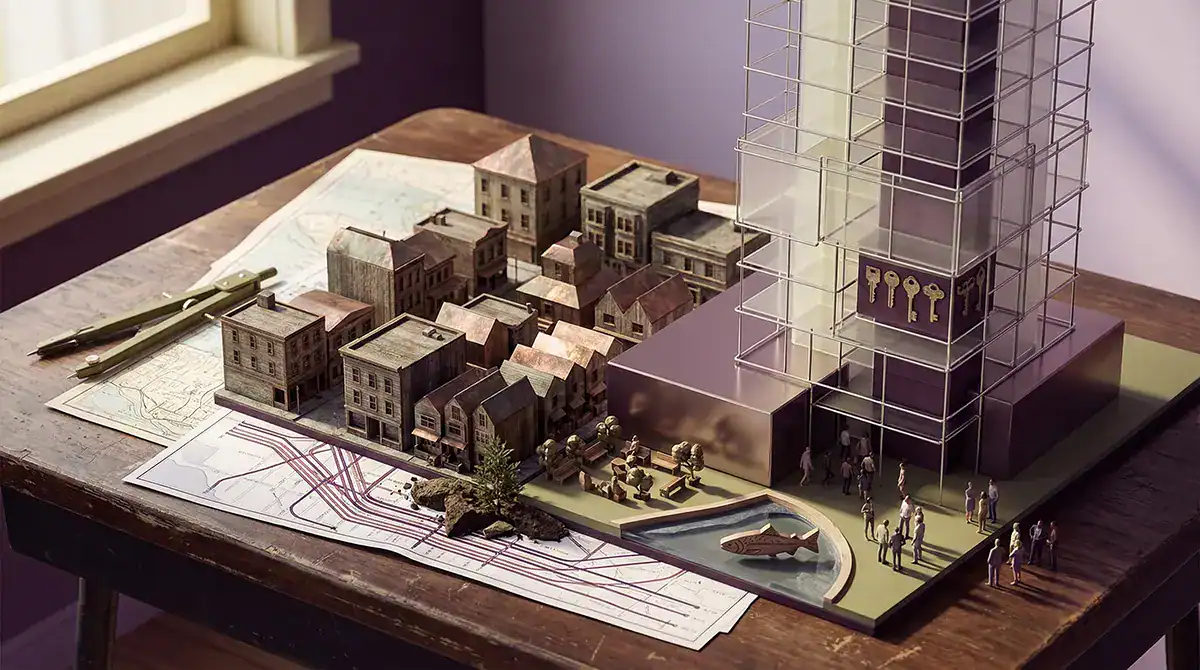
Whose lives, stories, and futures matter most when we design a city?

Urban Design

Gentrification, densification, equity. Decisions about housing and transit that make neighbourhoods liveable for some while displacing others.

8–9

What happens when a city can no longer keep its promises?

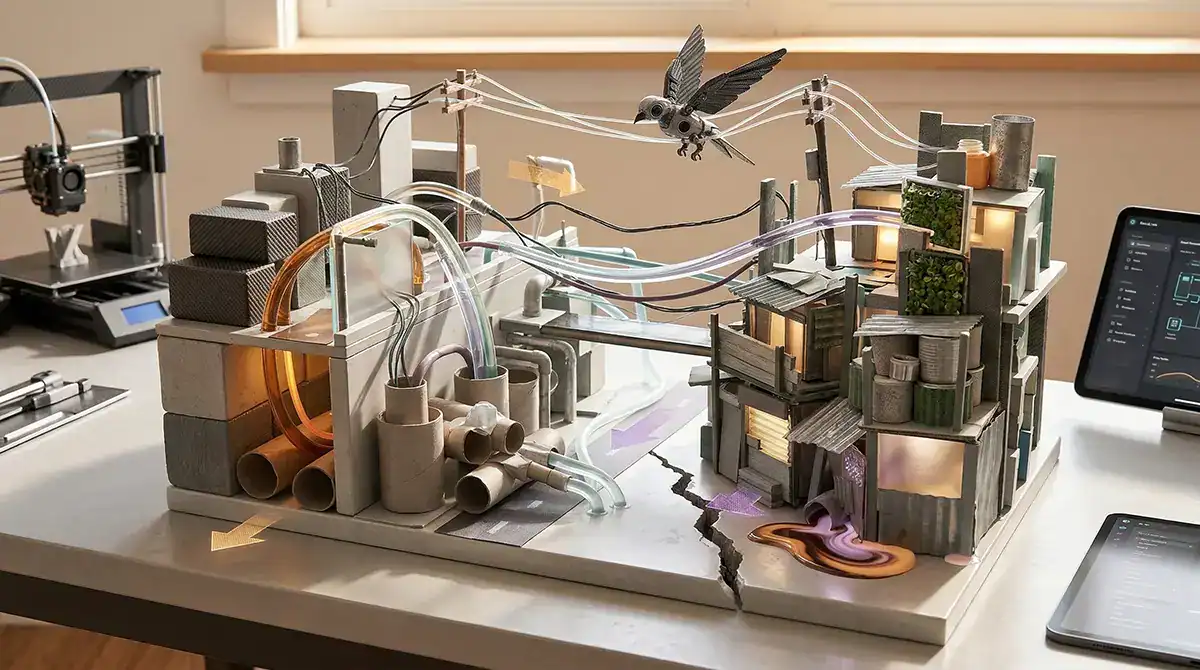
Cities Under Stress

Infrastructure failure, migration, inequality in real cities. When systems break, who suffers first?

8–9

What drives people to overthrow systems — and what comes after?

Revolution and Resistance

When systems fail people badly enough, they rise. The question isn't just why — it's what kind of future their struggle makes possible.

9-Year Arc

My neighbourhood → My country → Who built it and who it excluded → How governance works now → How poverty persists → How cities serve or exclude → When infrastructure fails → When people overthrow systems

The Scientific Literacy Thread

Observation → Mechanism → Ethics  ·  K–1 through Grade 8–9  ·  8 encounters across nine years

K-1 Scientific: Insects — student workK–1
Grade 2-3 Scientific: Plants and Pollinators — student work2–3
Grade 4-5 Scientific: Electricity — student work4–5
Grade 4-5 Scientific: Healthy Bodies — student work4–5
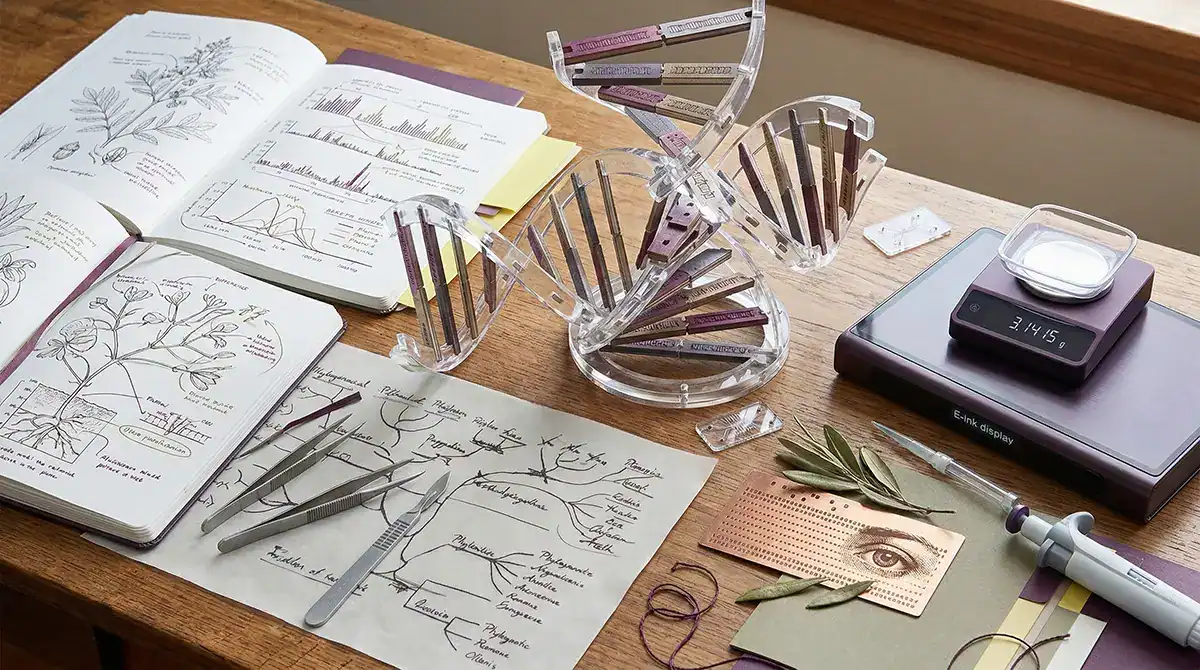
Grade 6-7 Scientific: Evolution — student work6–7
Grade 6-7 Scientific: Sports Science — student work6–7
Grade 8-9 Scientific: Code of Life — student work8–9
Grade 8-9 Scientific: The Body Electric — student work8–9
K–1

What can we learn by watching very small creatures very carefully?

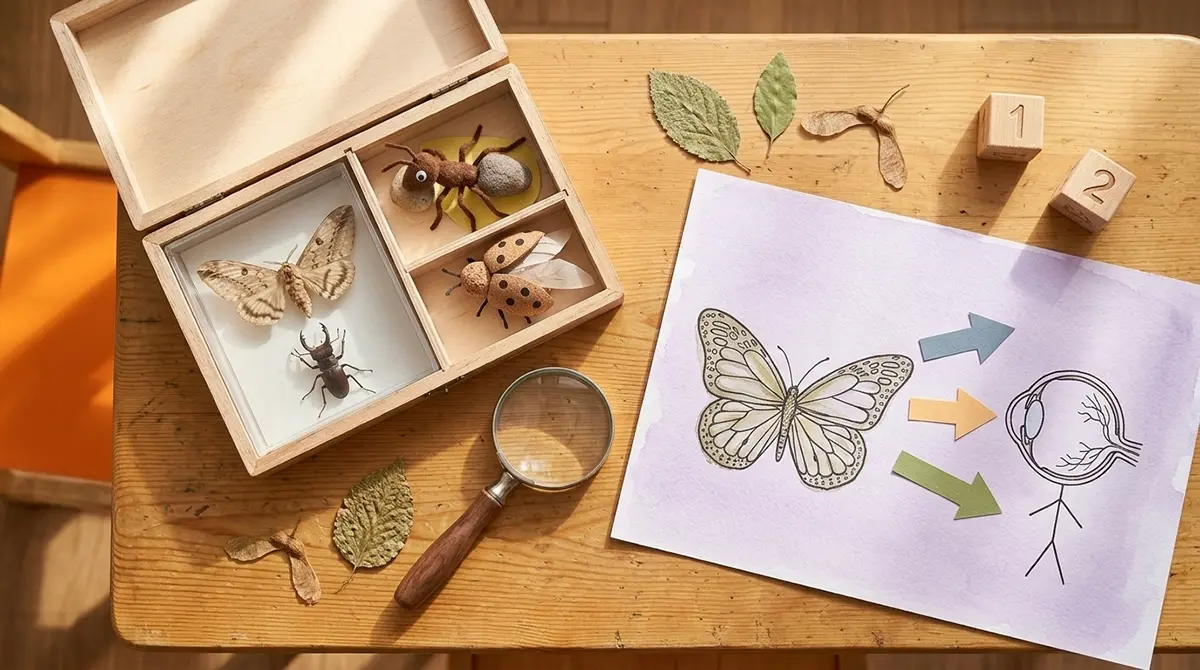
Insects

Close observation. Lifecycles. Curiosity about creatures most people overlook. The start of scientific thinking.

2–3

What happens when two living things need each other to survive?

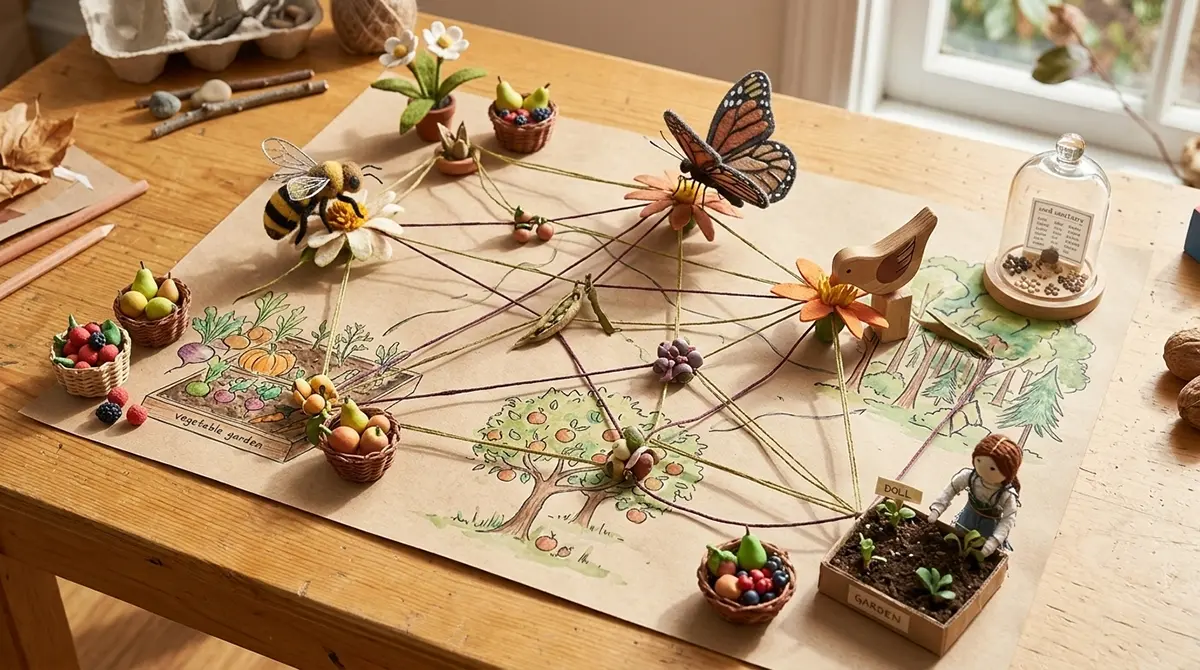
Plants and Pollinators

Symbiotic relationships. Ecosystem interdependence. What breaks when one partner disappears.

4–5Yr 1

How does an invisible force power everything we depend on?

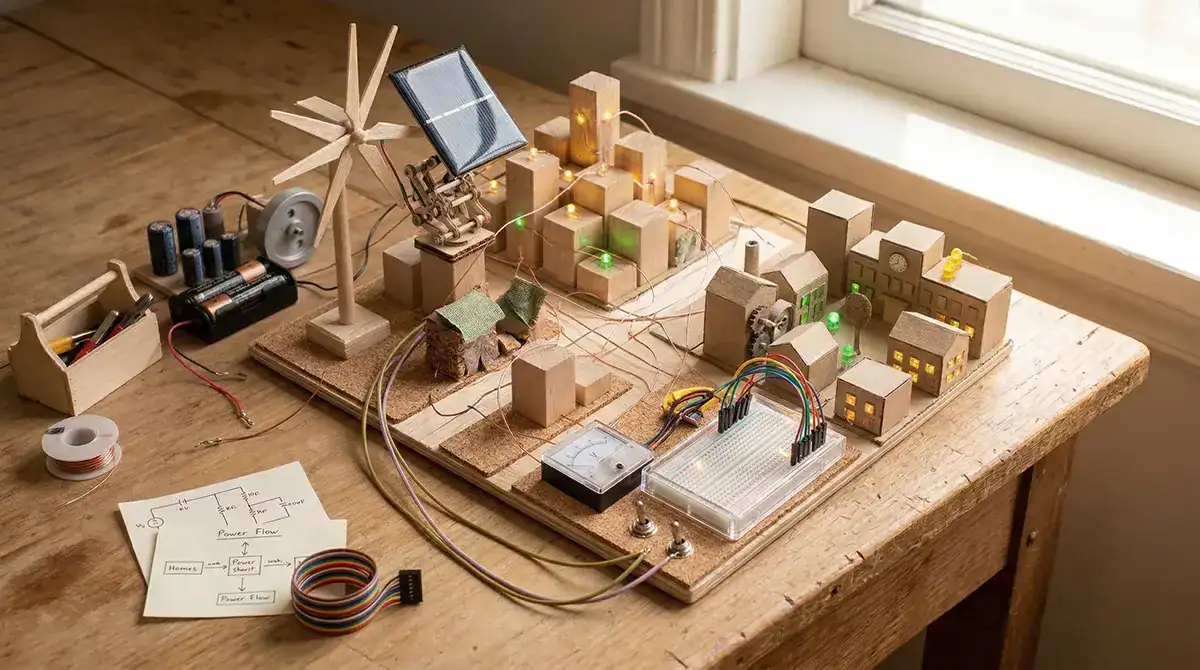
Electricity

Energy production, distribution, and access. The invisible force behind modern life — and who controls it.

4–5Yr 2

How do the choices we make become the body we live in?

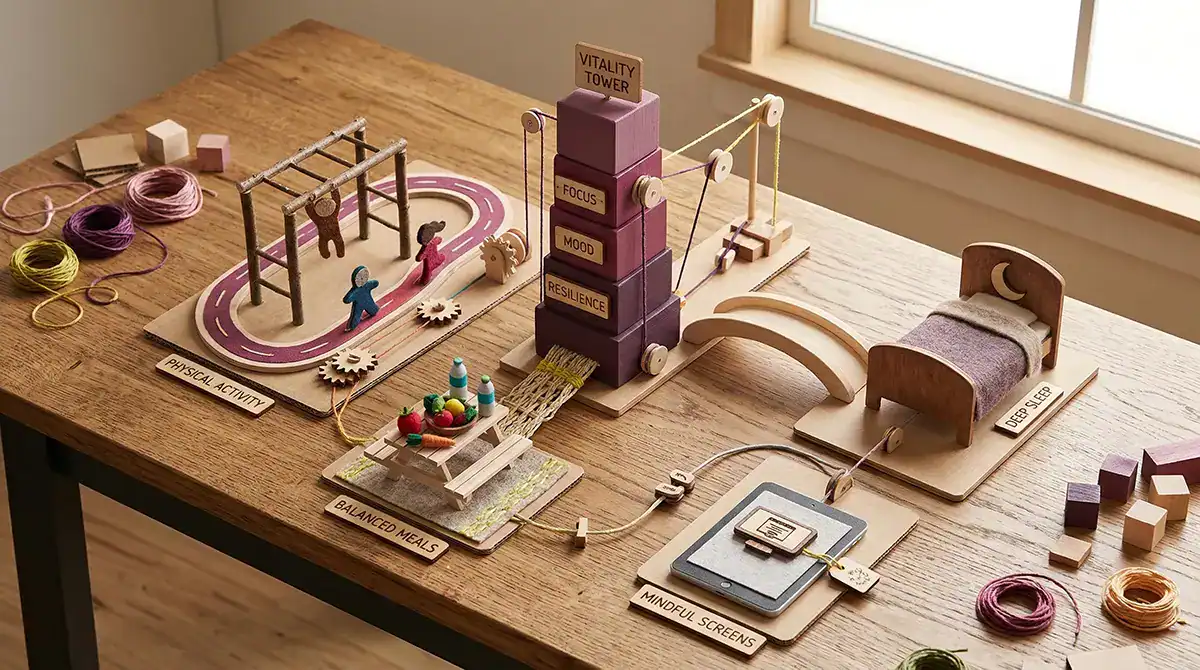
Healthy Bodies, Healthy Mind

Body systems working together. How choices about food, sleep, and movement interact as feedback loops.

6–7Yr 1

How does life continue to change — and what does that reveal about survival?

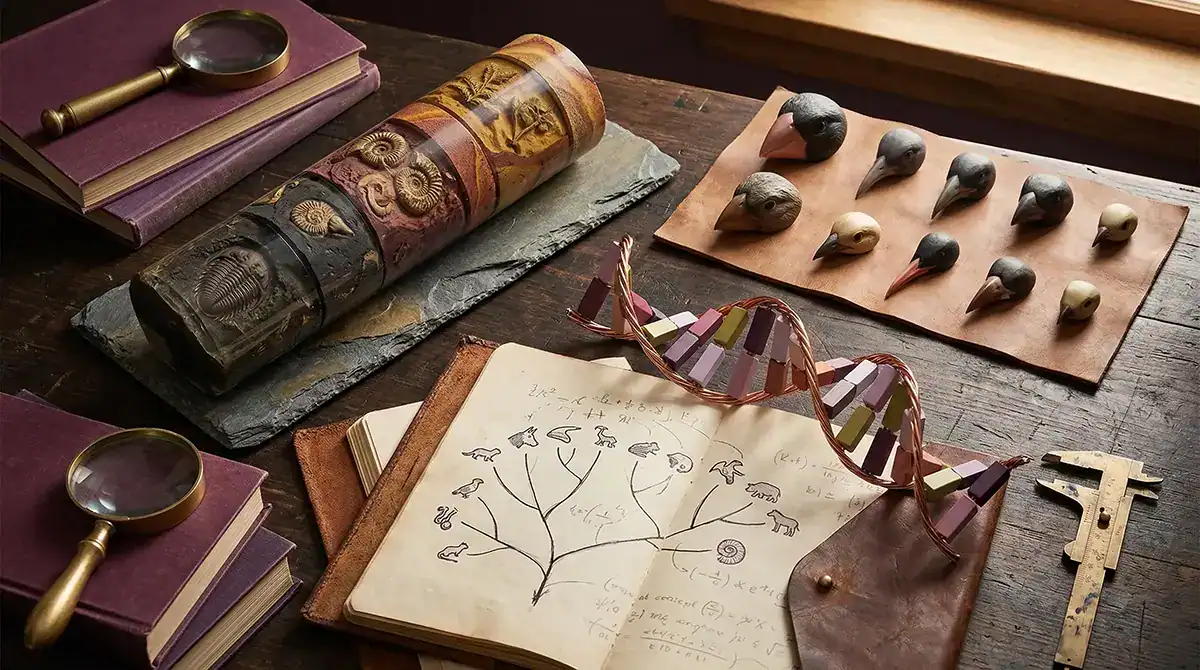
Evolution

Natural selection. Evidence-based reasoning about change. Why survival is tied to relationships, not just strength.

6–7Yr 2

How do we understand the body well enough to help it thrive?

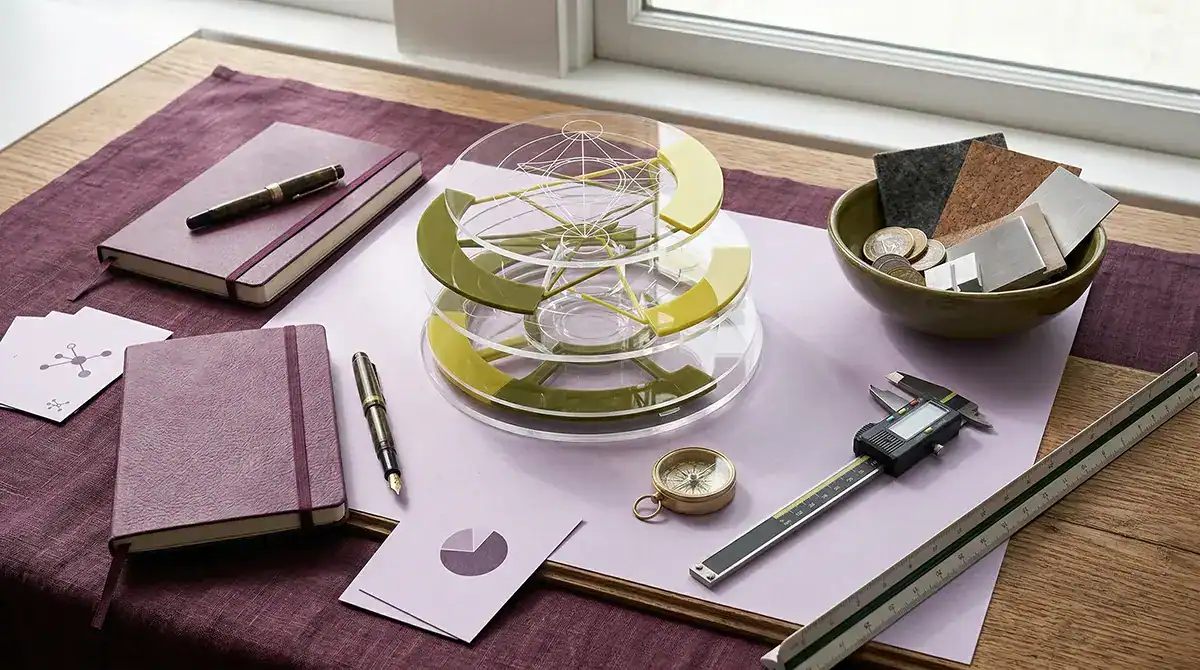
Sports Science

Human body as measurable system. Performance shaped by nutrition, recovery, data, and design — not just effort.

8–9

Just because we can change the code of life, does that mean we should?

Code of Life

Genetics, CRISPR, bioethics. The mechanism of life meets the moral weight of intervening in it.

8–9

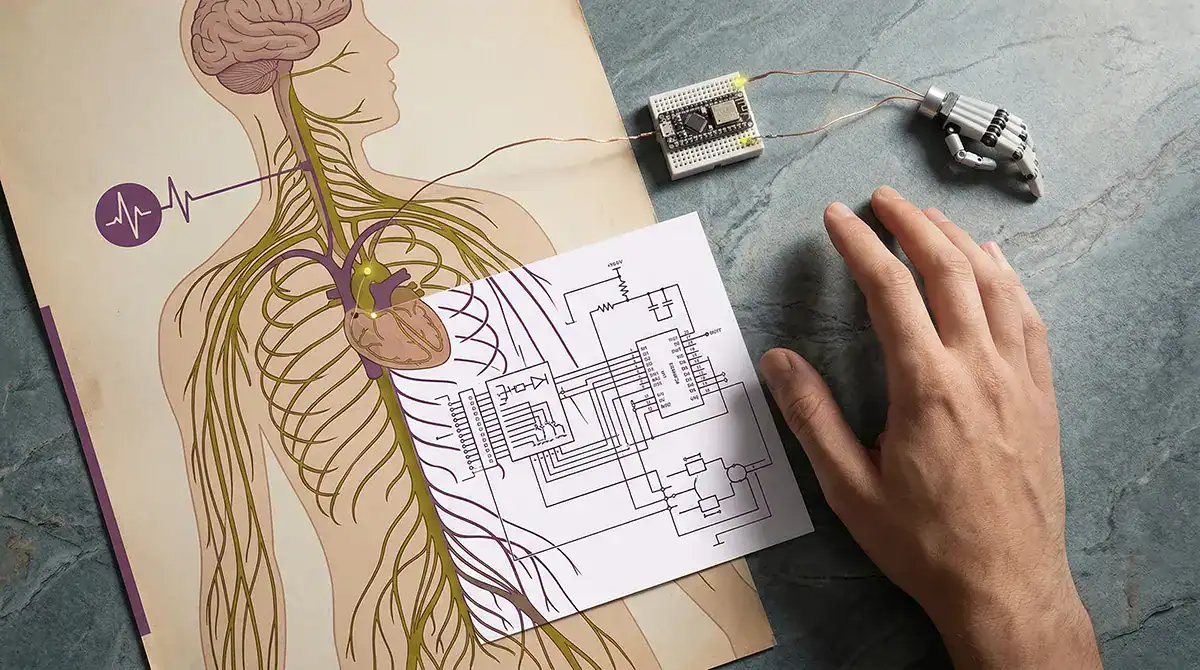
Where does the body end and the machine begin?

The Body Electric

Bioelectricity. Pacemakers. Brain-computer interfaces. The blurring boundary between biology and technology.

9-Year Arc

Close observation → Symbiotic systems → Invisible forces → Body as system → Natural selection → Measurable performance → Genetic code → Bioelectricity

The Global Understanding Thread

Local → Regional → Global → Structural  ·  K–1 through Grade 8–9  ·  8 encounters across nine years

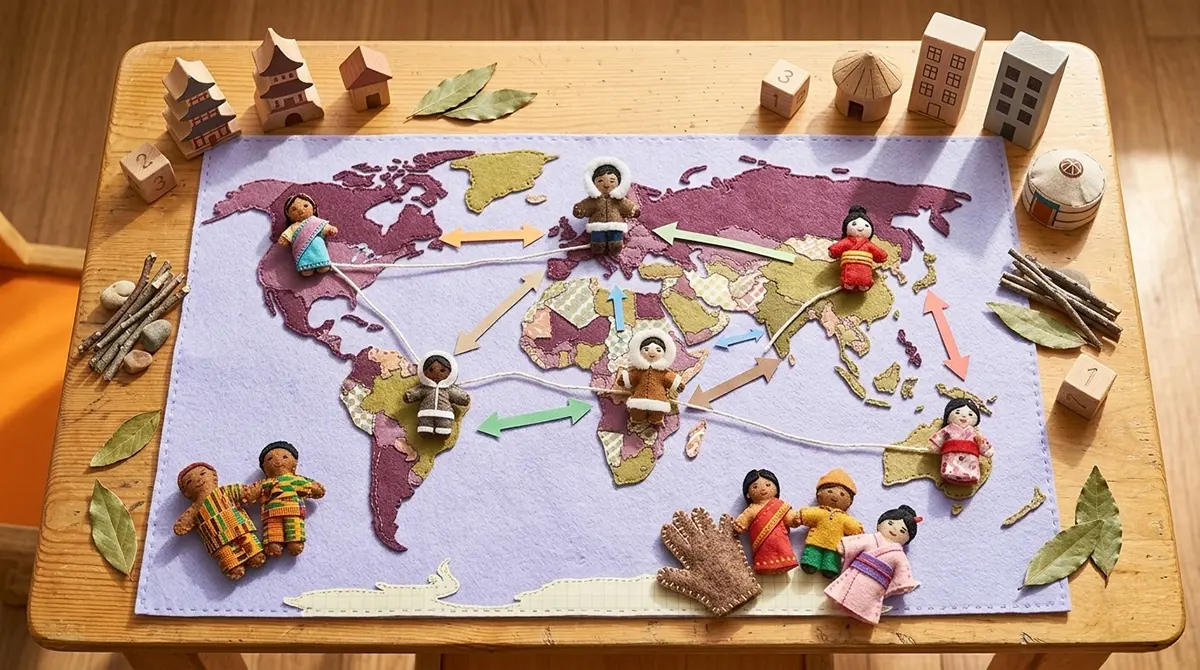
K-1 Global: It's A Small World — student workK–1
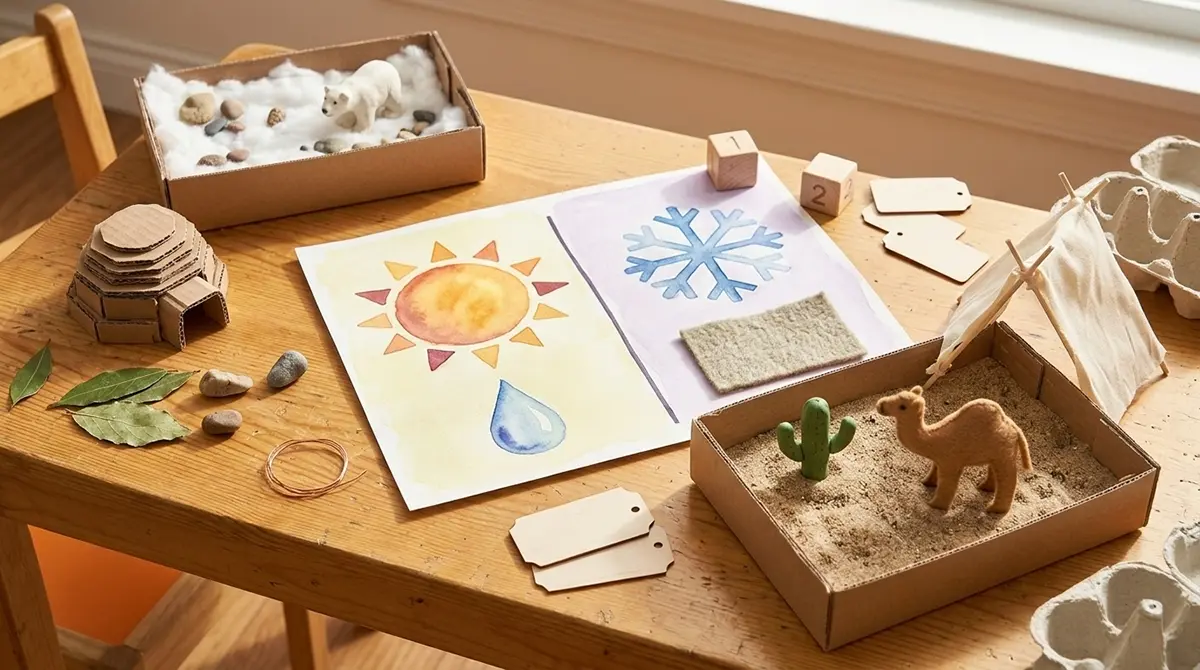
Grade 2-3 Global: Extreme Environments — student work2–3
Grade 4-5 Global: Medieval Times — student work4–5
Grade 6-7 Global: Ancient Greece — student work6–7
Grade 6-7 Global: Asia — student work6–7
Grade 8-9 Global: First Contact — student work8–9
Grade 8-9 Global: African Studies — student work8–9
Grade 8-9 Global: End of an Empire — student work8–9
K–1

How are families around the world the same — and beautifully different?

It's A Small World

Cultural diversity at the simplest level. Differences and similarities in how families live, eat, celebrate, and care for each other.

2–3

How does where you live shape how you live?

Extreme Environments

Geography shapes everything. How people adapt, build, and survive in the world's most challenging places.

4–5

How did people create order, solve problems, and live together in times very different from our own?

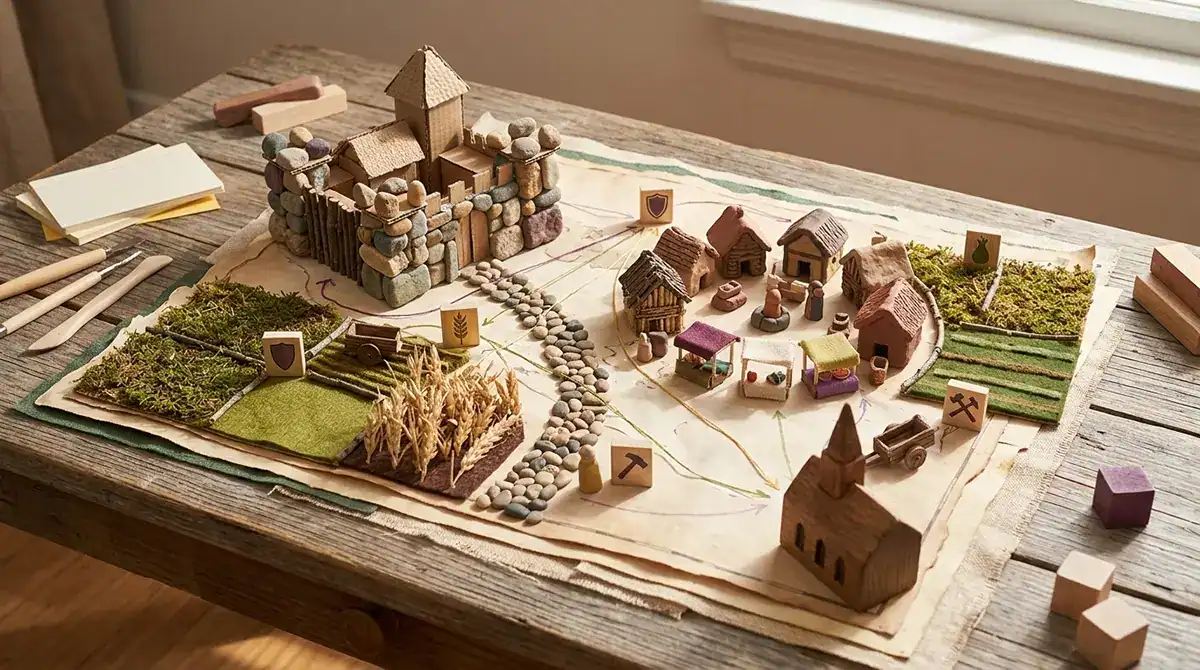
Medieval Times

Systems of land, loyalty, trade, and protection. Castles, villages, and marketplaces — a world deeply interconnected.

6–7Yr 1

Which ideas did we inherit — and which are still worth carrying forward?

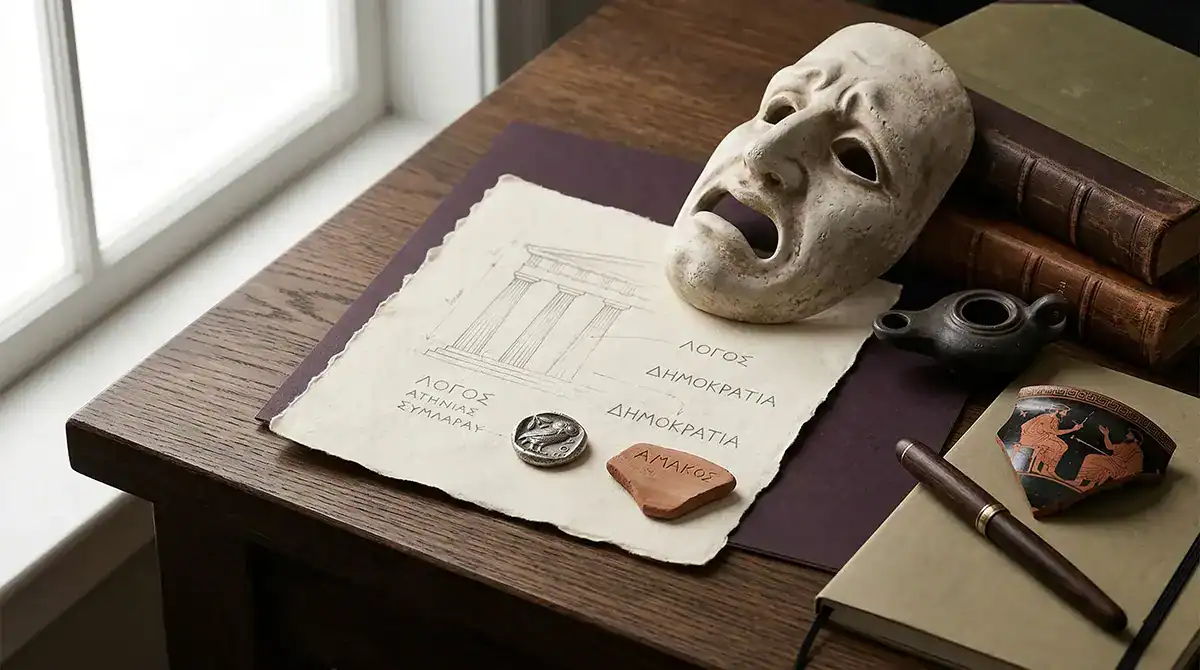
Ancient Greece

Democracy, philosophy, art, and debate. Both the brilliance and the limits of a civilization that still shapes us.

6–7Yr 2

Why can't half the world's population be understood through a single story?

Asia

Ancient trade routes, belief systems, fast-changing cities. A vast continent that defies any single perspective.

8–9

What happens when cultures collide — and who writes the history?

First Contact

When people separated by geography meet, the results are creative, disruptive, and deeply uneven. Power, perspective, and lasting consequences.

8–9

Whose stories define a continent — and whose are left out?

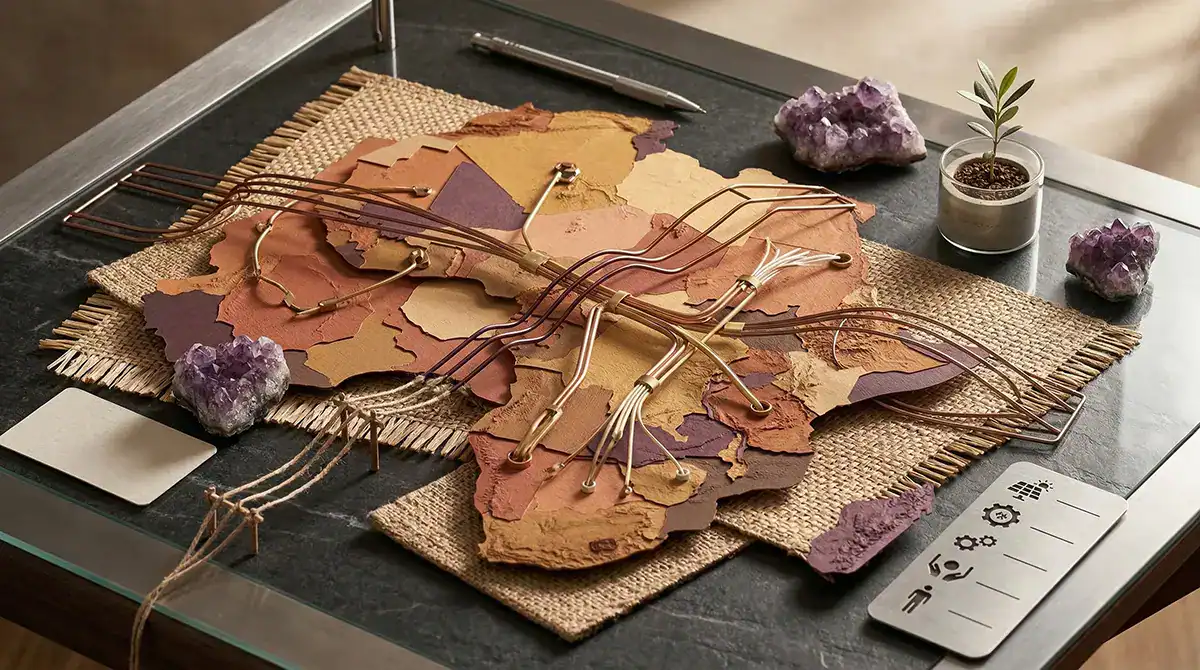
African Studies

54 nations, 2,000+ languages, and innovations from mobile banking to community conservation. Africa is not a single story.

8–9

If we can see decline coming, what choices do we have?

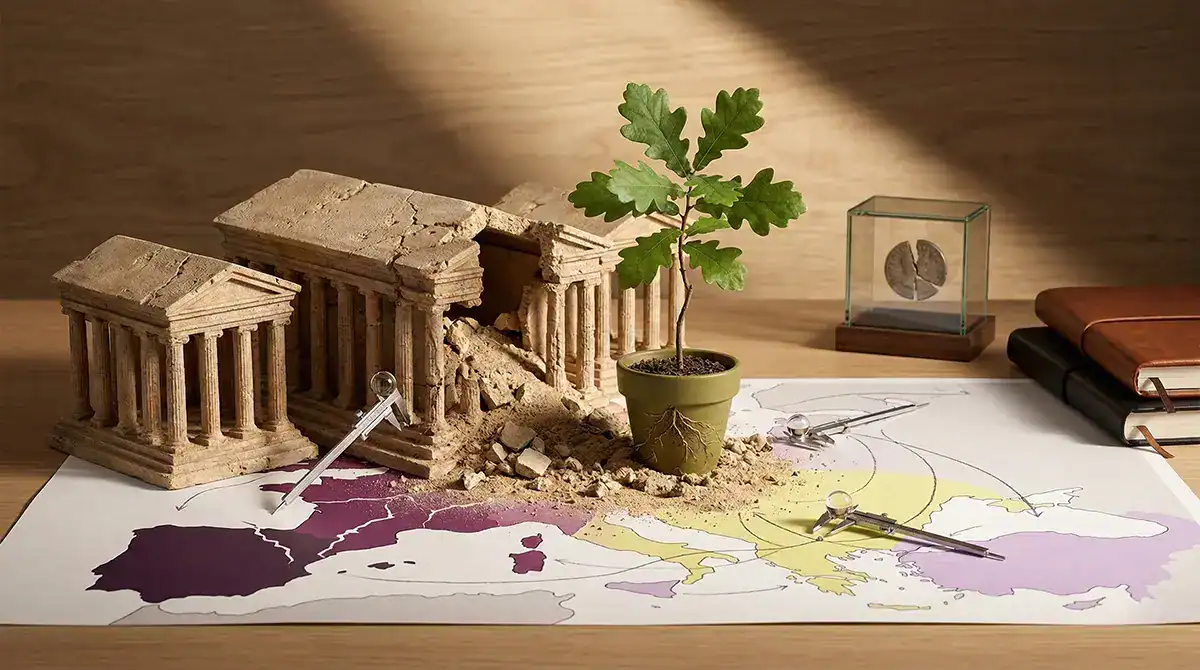
End of an Empire

Empires erode through overextension, inequality, and loss of legitimacy. The analytical tools to recognize fragility and imagine what comes next.

9-Year Arc

Cultural diversity → Geography shapes life → Historical societies → Democracy and philosophy → A continent's complexity → When cultures collide → Africa beyond stereotypes → Why empires fall

The Economic Thinking Thread

Needs → Trade-offs → Systems → Agency  ·  K–1 through Grade 8–9  ·  7 encounters across nine years

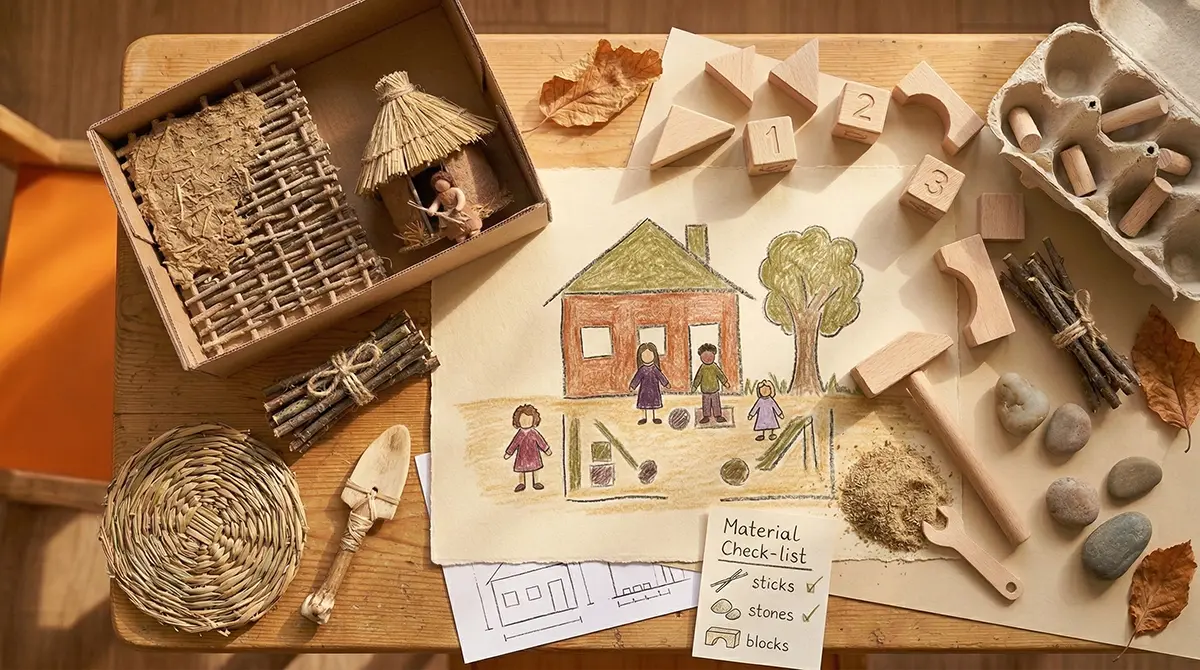
K-1 Economic: Construction — student workK–1
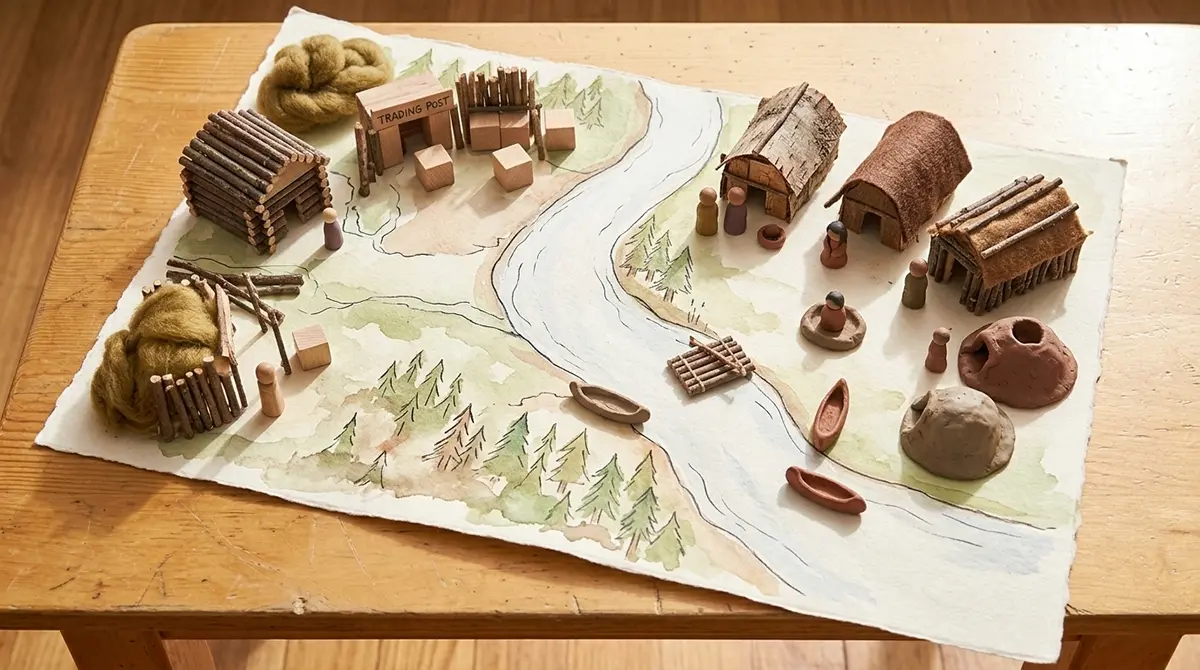
Grade 2-3 Economic: Settlers — student work2–3
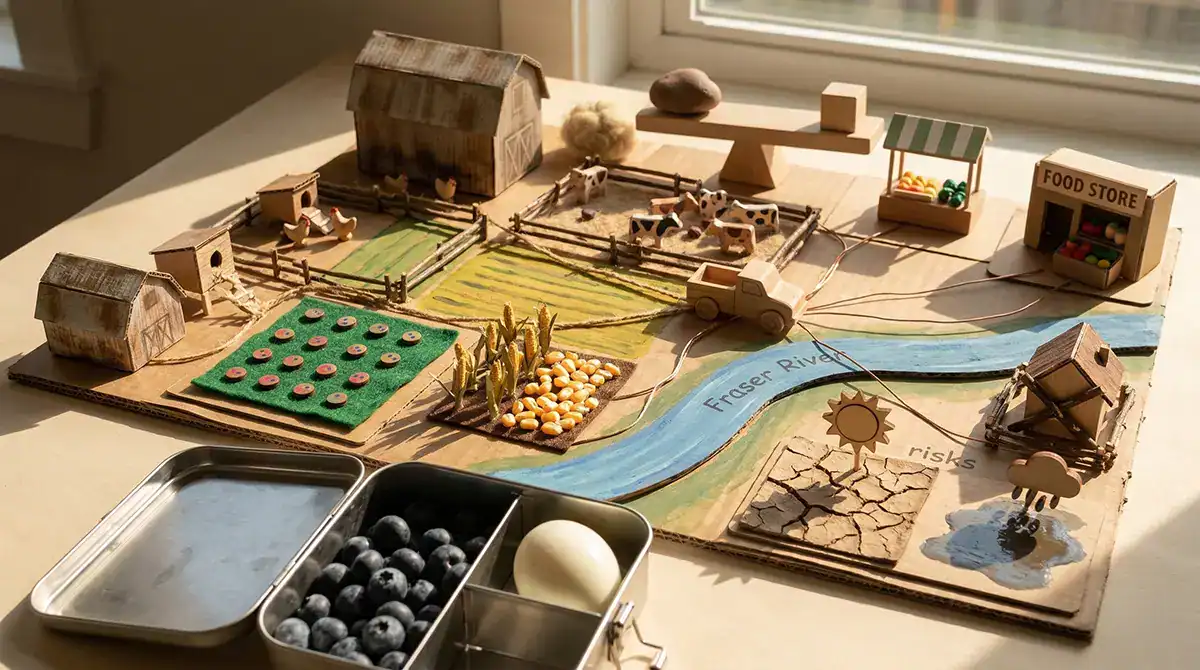
Grade 4-5 Economic: Rural Farms — student work4–5
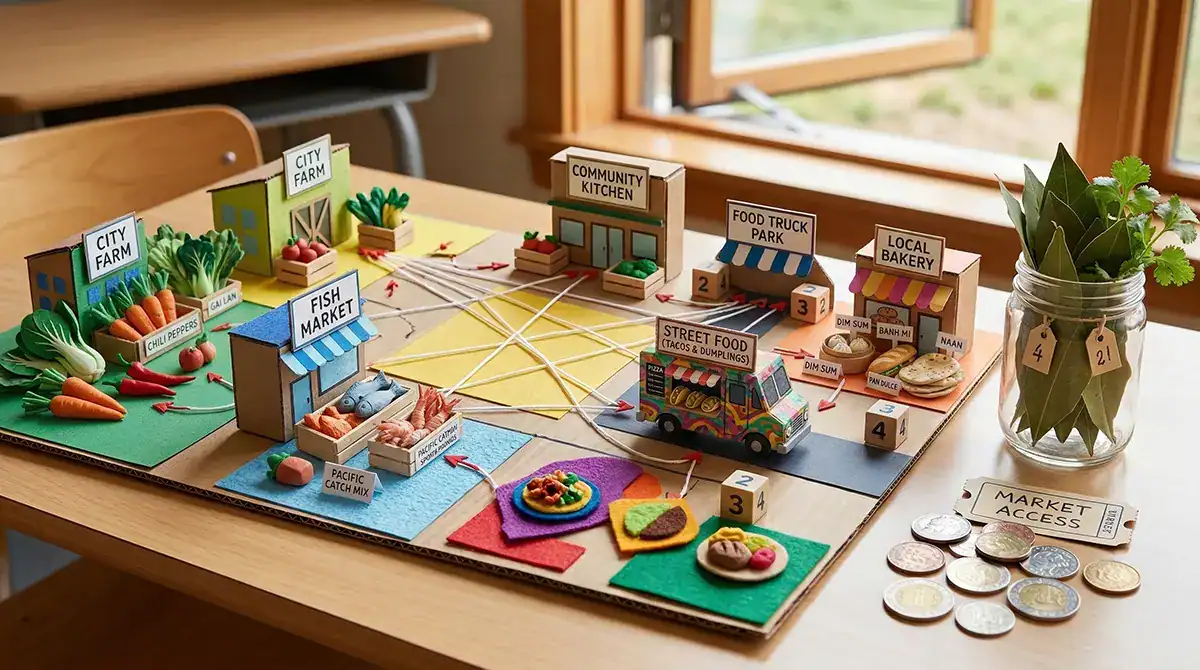
Grade 4-5 Economic: Edible Vancouver — student work4–5
Grade 6-7 Economic: Fashion — student work6–7
Grade 6-7 Economic: Energy and Machines — student work6–7
Grade 8-9 Economic: Entrepreneurs — student work8–9
K–1

What should we build so it helps people now and still makes sense for the future?

Construction

Materials, purpose, planning. Building for people — and thinking about what a community needs to work.

2–3

What does it mean to arrive somewhere, to take, and to share a place?

Settlers

Newcomers, Indigenous peoples, and land. Who claims a place, who was already there, and what gets built on those choices.

4–5Yr 1

When a place can grow food, what should matter most?

Rural Farms

Food production, economics, land use, rising costs. Farming as a system full of trade-offs, values, and consequences.

4–5Yr 2

What does a city taste like when it's fair, diverse, and connected to place?

Edible Vancouver

Local food systems. Culture, business, and the service industry. Who has access to fresh, meaningful food — and whose traditions are celebrated.

6–7Yr 1

What does fashion say about us — and what does it cost people and the planet?

Fashion

Supply chains, labour, marketing, and consumer identity. Clothing as art, industry, and global system of waste.

6–7Yr 2

What kinds of energy and invention are worth powering our future?

Energy and Machines

How energy flows through systems and how machines extend human capacity — always with environmental and social consequences.

8–9

What needs to change — and how could you do it better?

Entrepreneurs

Innovation, risk, funding, marketing, and real value. The boldest ideas start with seeing what's broken and building something that works.

9-Year Arc

Building for people → Arriving and sharing → Food production and trade-offs → Local food systems → Supply chains and consumption → Energy and invention → Innovation, risk, and impact

Click any question to see details

See how these threads come alive in the classroom.

Book a Tour

The Identity and Environmental threads above are two of six deliberate progressions running through the curriculum. Here are all six:

Identity

Body & Emotions → Social Self → Culture → Bias & Stereotypes → Visible vs. Invisible → Digital Identity → Who Is Allowed To Be

K–1 through Grade 8-9 · 9 themes

Environmental Reasoning

Fall & Seasons → Go Green → Biomes → Water → Climate Change → Forests → Plastics → Pollution

K–1 through Grade 8-9 · 9 themes

Civic Reasoning

Our Community → O Canada → Canada Then → Canada Now → Tenements → Urban Design → Cities Under Stress → Revolution

K–1 through Grade 8-9 · 8 themes

Scientific Literacy

Insects & Salmon → Plants & Pollinators → Electricity → Healthy Bodies → Evolution → Sports Science → Code of Life → The Body Electric

K–1 through Grade 8-9 · 11 themes

Economic Thinking

Construction → Settlers → Rural Farms → Edible Vancouver → Fashion → Energy & Machines → Entrepreneurs

K–1 through Grade 8-9 · 7 themes

Global Understanding

It's A Small World → Extreme Environments → Medieval Times → Ancient Greece → Asia → First Contact → African Studies → End of an Empire

K–1 through Grade 8-9 · 9 themes

Every theme belongs to at least one thread. Every thread spans the full K-9 journey. Explore the program pages to see how each theme connects.

What Nine Years of This Builds

Themes aren't just a better way to teach subjects. They're a way to teach children how to think — about systems, about ethics, and about themselves.

Systems Thinking

Every theme at Pear Tree teaches children to look for connections. In K-1, a child studying "Pets" learns that an animal's wellbeing depends on food, shelter, attention, and the choices its owner makes. By Grade 6-7, a student studying "Oil" traces one substance through chemistry, economics, geopolitics, and environmental damage — all connected, all affecting each other.

This is systems thinking: the ability to see how parts relate, how actions ripple, and why simple answers rarely work for complex problems. It's the skill behind every good scientist, every good policy-maker, and every good citizen. And it's built into every theme, from Kindergarten onward.

Moral Seriousness

We don't give children a sanitised version of the world. Even our youngest students think about fairness, access, and responsibility — through questions sized for their age. In K-1, "Our Community" asks who gets safe play spaces and who doesn't. In Grade 4-5, "Canada Then" asks who benefited from colonisation and who was harmed. In Grade 8-9, "Who We Are Allowed To Be" asks which identities society rewards and which it polices.

This isn't politics in the classroom. It's trust — trust that children can engage with real questions if they're given the right tools and the right support. The families who choose Pear Tree want their children to think, not just comply.

A Clear Developmental Arc

Our K-1 themes are concrete and sensory — children touch, see, and feel their way into ideas. By Grade 4-5, the same kinds of ideas return with causal reasoning: why does this happen? Who benefits? By Grade 8-9, students build structural models and confront ethical complexity.

A child who learned to name their emotions in Kindergarten becomes the teenager analysing how institutions shape who gets to belong. That progression doesn't happen by accident. It happens because someone designed 74 themes in a specific order.

Why There's No Right Answer

Every theme at Pear Tree ends with a question that can't be answered with a fact. That's deliberate.

K–1 · Pets

What does it mean to create a home where another creature can truly thrive?

Grade 4-5 · Canada Then

Who benefited, who was harmed, and how do those choices still shape what feels normal in Canada today?

Grade 8-9 · Code of Life

Just because we can change the code of life, does that mean we should?

Grade 8-9 · End of an Empire

If we can see decline coming, what choices do we have?

These questions aren't decoration. They're the point.

Each theme gives students the knowledge, evidence, and perspectives they need to wrestle meaningfully with its question. The goal isn't to arrive at the "correct" answer — it's to develop judgement: the ability to weigh competing evidence, hold complexity, and reach a reasoned position you can defend.

That's what separates a school that teaches content from a school that develops thinkers. Content gives you information. Open-ended questions give you something harder and more valuable — the practice of figuring out what the information means.

By the time a Pear Tree student reaches Grade 9, they've spent nine years practising this. Not in a single "critical thinking" class. Across 74 themes, each one ending with a question worth arguing about.
Mapped to the BC Curriculum. Not experimental.

Every theme at Pear Tree is backed by a detailed curriculum plan that maps exactly which BC Ministry of Education learning standards are covered — and how.

Your child covers the same curriculum as any school in BC. They just learn it through real projects instead of worksheets.

We've developed 74 themes across K–9, built over nearly a decade of practice. This is a refined method — not a pilot program.

Modern school building of Pear Tree School in British Columbia, Canada.

School Certificate No. 3996918

FISA BC
AMS

More Than Academics

Built Into Every Day

The Pear Tree Method™ isn't only about how subjects connect. It's about building the whole child — physically, socially, and emotionally — through daily habits, not occasional programs.
🏃

Daily Physical Education

One full hour of PE every single school day, led by a dedicated PE teacher. Not twice a week. Every day.

🍎

Chef-Prepared Hot Lunch

A Red Seal chef prepares fresh, nutritious meals daily. Seasonal, locally sourced, included for all students.

🎓

Master's-Level Teachers

Every classroom teacher holds a graduate degree in education. Classes capped at 16. Your child is known, not just counted.

Testimonials

What Parents Say About The Pear Tree Method™

"

I went looking for something more worthy of the 21st century; I wanted something more effective and real.

Ivy Dreger

Pear Tree parent

"

Their project-based learning approach is implemented with an enormous amount of planning and thought, and it shows in the high quality of the children's work.

Pear Tree Parent

OurKids.net review

"

I really feel this way of teaching provides as equal an opportunity as possible for every student to succeed in life, whatever that is.

Kathryn

Pear Tree parent

See It for Yourself

Reading about The Pear Tree Method™ is one thing.

Watching your child's face when they get it — that's something else. Come see a class in action.